Good news: China is better value than most travellers expect. Food, transport and mid-range hotels are noticeably cheaper than Western Europe, North America or Japan — only flights to get there and the very top hotels feel pricey. Here’s what a trip really costs, with real numbers.
(Prices are in RMB / Chinese yuan, ¥, with rough US$ at ≈¥7 to the dollar. They’re approximate 2026 figures — treat them as a guide.)
Daily budget by travel style
Per person, per day, excluding international flights:
| Style | Per day | What it looks like |
|---|---|---|
| Backpacker | ¥250–400 (≈$35–55) | Hostel dorms, street food and local restaurants, metro and buses, mostly free/cheap sights |
| Mid-range | ¥600–1,000 (≈$85–140) | A clean 3-star or chain hotel, a mix of casual and nicer restaurants, Didi rides, paid attractions, the odd high-speed train |
| Comfort / luxury | ¥1,500+ (≈$210+) | 4–5 star hotels, fine dining, private drivers/guides, business-class rail and flights |
Most first-timers land in the mid-range band and eat very well doing it.
What things actually cost
| Item | Typical price |
|---|---|
| Street-food meal (noodles, baozi, skewers) | ¥15–40 (≈$2–6) |
| Meal at a normal restaurant (per person) | ¥40–90 (≈$6–13) |
| Hotpot or a shared sit-down dinner (per person) | ¥80–150 (≈$11–21) |
| Local beer / bottled water / convenience-store coffee | ¥8–15 / ¥2 / ¥10–20 |
| Metro ride | ¥3–7 (≈$0.50–1) |
| Didi (ride-hailing) across town | ¥30–60 (≈$4–8) |
| High-speed rail, 2nd class (e.g. Beijing–Xi’an, ≈5 hr) | ≈¥515 (≈$73) |
| Domestic flight (booked ahead) | ¥400–1,200 (≈$55–170) |
| Hostel dorm bed | ¥60–120 (≈$8–17) |
| Clean chain hotel (Hanting / JI / Atour) | ¥250–450 (≈$35–63) |
| 4–5 star hotel | ¥700–2,000 (≈$100–280) |
| Major attraction (Forbidden City ¥60, Mutianyu Great Wall ¥40 + cable car, Terracotta Warriors ¥120) | ¥40–120 (≈$6–17) |
| China eSIM for the trip | ≈$8–16 (see the eSIM guide) |
A sample two-week budget (mid-range, one person)
A rough idea for ≈14 days across, say, Beijing, Xi’an, Chengdu and Shanghai:
- Hotels (¥350 × 14): ≈¥4,900
- Food (¥200/day): ≈¥2,800
- Intercity high-speed rail / a flight or two: ≈¥2,500
- Local transport (metro + Didi): ≈¥700
- Attractions & experiences: ≈¥1,200
- eSIM, sundries, souvenirs: ≈¥1,000
≈ ¥13,000 (≈$1,850) per person, excluding international flights. Backpackers can do the same trip for roughly half; comfort travellers will spend two to three times more.
How to keep costs down
- Eat where locals eat. Street stalls and busy neighbourhood restaurants are both the cheapest and the best food (see the food guide).
- Take 2nd-class high-speed rail. It’s fast, comfortable and a fraction of business class — and often cheaper than flying once you count airport time. See the rail guide.
- Stay at domestic chains. Hanting, JI and Atour give reliable comfort for far less than international brands (recommended hotels).
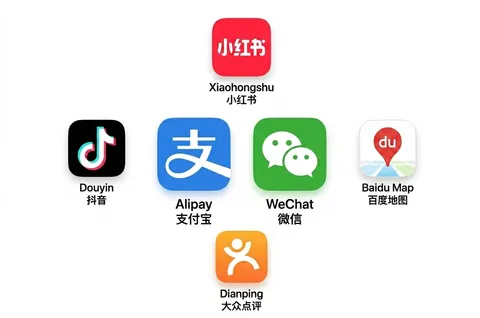
- Go cashless. Set up Alipay or WeChat Pay — and note that tipping is not expected in China, which quietly saves money everywhere.
- Travel in shoulder season. Prices (and crowds) drop outside the peak holidays; winter is cheapest of all.
- Book trains and flights early. High-speed rail and domestic flights are cheapest weeks ahead, especially around holidays.
FAQ
Is China expensive to travel in? No — for food, transport and mid-range hotels it’s cheaper than Western Europe, North America or Japan. The main costs are international flights and top-end hotels.
What’s a reasonable daily budget for China? About ¥250–400 (≈$35–55) for backpackers, ¥600–1,000 (≈$85–140) for comfortable mid-range travel, and ¥1,500+ (≈$210+) for luxury, excluding international flights.
Do you tip in China? No — tipping isn’t customary in mainland China and isn’t expected at restaurants or in taxis.
Should I bring cash? Carry a little for emergencies, but China runs on mobile payment — set up Alipay or WeChat Pay and you’ll rarely touch cash.