China is the size of a continent, so there’s no single “best time to visit” — it depends entirely on where you’re going. The good news: two windows work almost everywhere, and the bad weeks to avoid are easy to memorise.
The two safe bets:
spring and autumn
For most first-timers doing the big cities and famous sights, aim for:
- Spring — April to May: mild, blossoming, comfortable.
- Autumn — September to October: crisp, clear skies, golden colours. The single best season for scenery.
Avoid the height of summer in the lowlands (hot and humid) and the depths of winter in the north (cold) — unless a specific region or experience calls for it (below).
Best time to visit, region by region
| Region | Best months | Notes |
|---|---|---|
| North (Beijing, Xi’an, Great Wall) | Apr–May, Sep–Oct | Cold but clear and cheap in winter; hot, dusty summers. |
| East / Jiangnan (Shanghai, Hangzhou, Suzhou) | Mar–May, Sep–Nov | Skip the plum rains (梅雨) of mid-June to early July; summers are steamy. |
| South (Guangzhou, Guilin, Yangshuo) | Oct–Dec, spring | Avoid hot, wet summers and typhoon season (Jul–Sep) on the coast. |
| Southwest (Chengdu, Yunnan) | Yunnan is mild year-round; autumn best | Kunming is the “spring city”; Chengdu is grey but temperate. |
| Tibetan plateau (Tibet, Qinghai) | May–Oct | Winter is cold and many areas close; Tibet needs a permit. |
| Xinjiang | May–Oct | Grasslands in summer; Kanas & Hemu blaze gold in late September. |
| Northeast (Harbin) | Dec–Feb or summer | Winter for the Ice & Snow Festival; cool summers escape the heat. |
| Tropical south (Hainan, Xishuangbanna) | Nov–Apr | Beach-and-warmth season while the rest of China is cold. |
Season-by-season route ideas
- Spring (Apr–May) — the classic “golden triangle” of Beijing → Xi’an → Shanghai, plus the Jiangnan water towns and Guilin’s karst in fresh green.
- Summer (Jun–Aug) — go high and north to escape the heat: Tibet, Xinjiang (Kanas, Bayanbulak), Yunnan’s highlands, Inner Mongolia’s grasslands, or even Harbin for cool air.
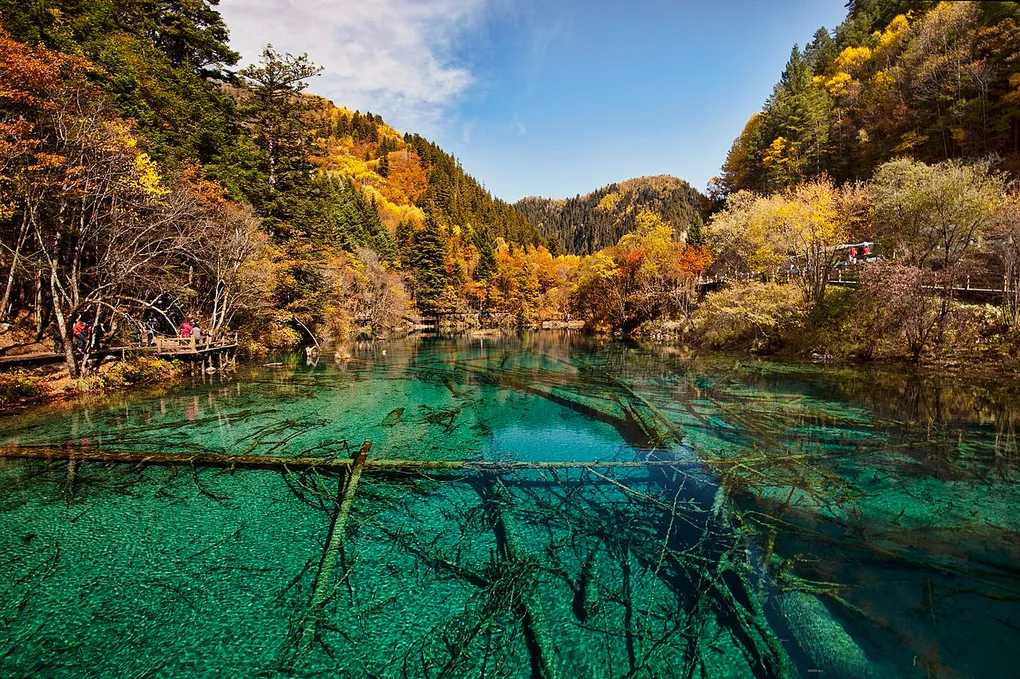
- Autumn (Sep–Oct) — the best all-rounder: Jiuzhaigou and Kanas in autumn colour, Huangshan’s sea of clouds, the golden triangle, and the Longji rice terraces at harvest. (Just dodge Golden Week — see below.)
- Winter (Nov–Feb) — Harbin’s Ice Festival, Hainan’s beaches, warm Yunnan/Xishuangbanna, and the big northern sights (a snow-dusted Forbidden City or Great Wall) with far fewer crowds and lower prices.
How to dodge the crowds:
the dates to avoid
This matters more in China than almost anywhere, because of domestic travel. On the big public holidays, 1.4 billion people travel at once — trains and flights sell out, prices spike, and famous sights hit capacity. The weeks to plan around:
- 🔴 National Day / “Golden Week” (Oct 1–7) — the worst week of the year for sightseeing. Everything is mobbed and pricey. If you’re in China then, stay in one city and avoid intercity travel and headline attractions.
- 🔴 Spring Festival / Chinese New Year (春节, late Jan–Feb; the date shifts yearly) — the world’s largest annual human migration (chunyun, 春运). Transport is booked solid for weeks, and many shops and restaurants close for several days. Magical to witness, miserable to travel through.
- 🟠 Labour Day (May 1–5) — a mini-Golden Week; crowded and dear.
- 🟠 Summer school holidays (Jul–Aug) — domestic family travel peaks at big-name sights and beaches.
How to beat the crowds even in shoulder season:
- Travel midweek, not on weekends, between cities.
- Book trains, flights and big-attraction tickets weeks ahead around any holiday — or simply shift your dates by a week to sit just outside the rush.
- During peaks, swap headline sights for lesser-known spots (a quieter Great Wall section, a smaller water town).
- Popular parks (Jiuzhaigou, Zhangjiajie) cap daily visitors — reserve online in advance.
Time it to the food, too
China’s calendar is also a menu. Hairy crab is autumn-only; qingtuan is a spring thing; zongzi belongs to early summer. If a delicacy is on your list, line your trip up with it — see seasonal must-eat foods in China.
FAQ
When is the best overall time to visit China? April–May and September–October — mild weather, clear skies, and the best scenery, suiting nearly every region.
Which dates should I avoid? The National Day “Golden Week” (Oct 1–7) and the Spring Festival week (late Jan–Feb), when hundreds of millions of locals travel and sights are overwhelmed.
Is summer a bad time to visit? It’s hot and humid in the lowland cities, but ideal for the high and northern regions — Tibet, Xinjiang, Yunnan’s highlands and the northeast.
When is the cheapest time to go? Winter (excluding Chinese New Year) brings the lowest prices and thinnest crowds — great for northern sights in the snow, or for escaping to tropical Hainan.