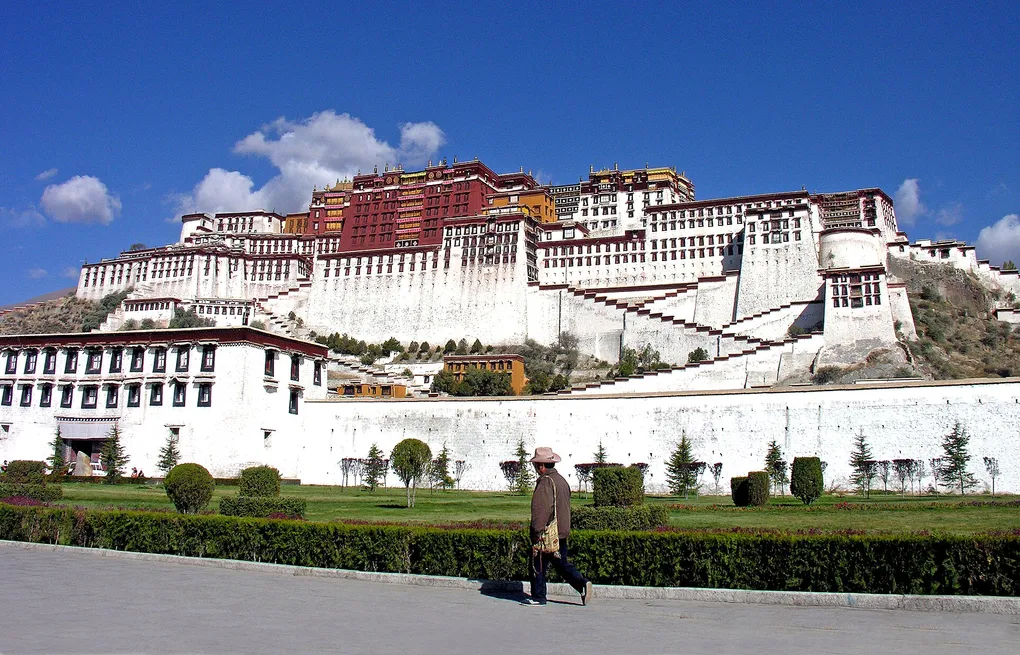
Two of China’s most jaw-dropping regions — and two of the most misunderstood. The short version: you can visit both as a foreigner, but the rules could hardly be more different. Tibet requires a permit and a guided tour; Xinjiang you can travel independently, but expect heavy security. Here’s how each really works.
Tibet:
yes — but only on an organized tour
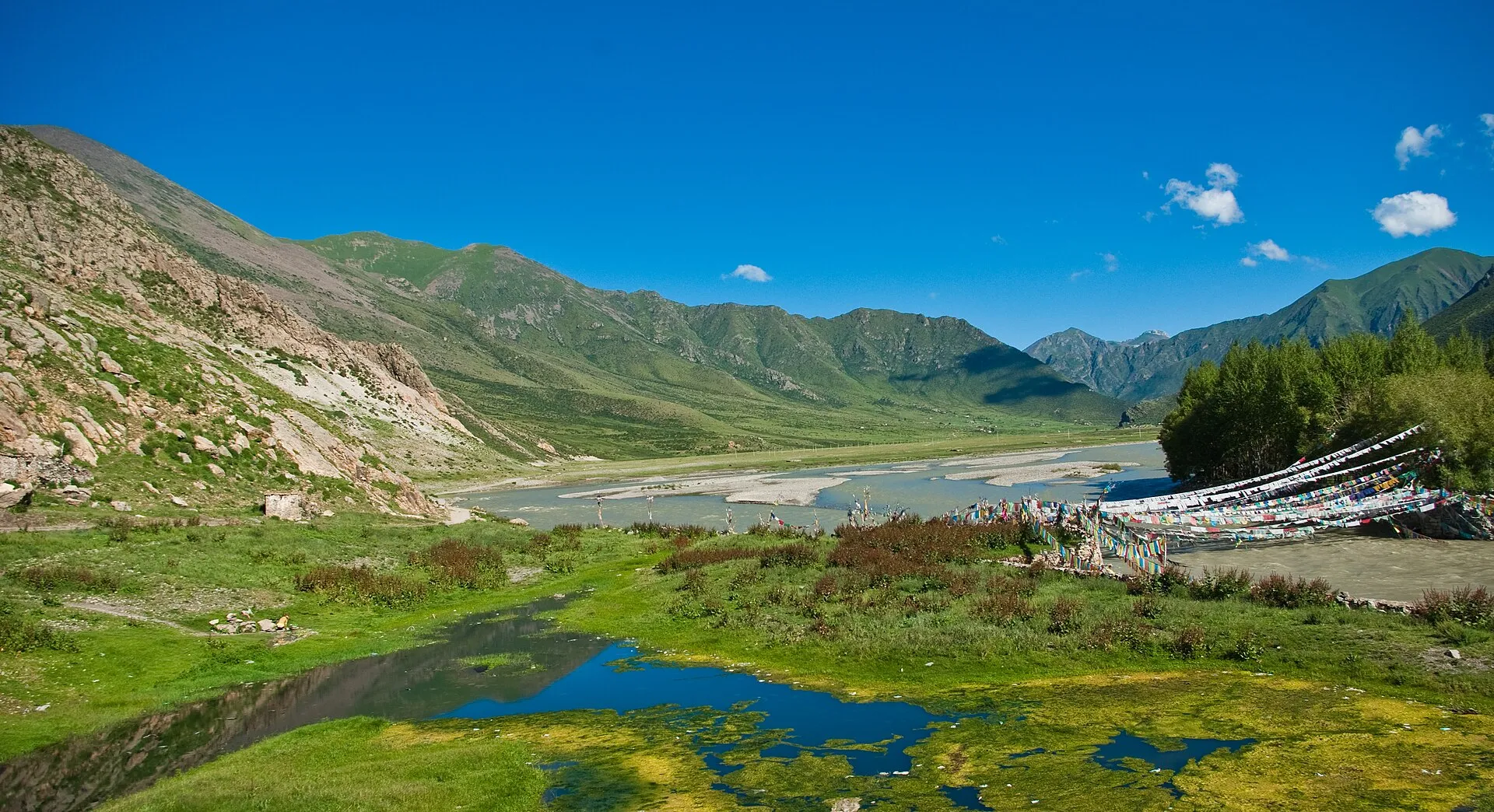 Prayer flags over a highland river valley near Lhasa — the Tibet beyond the Potala.
Foreign tourists cannot travel independently in the Tibet Autonomous Region (TAR). To go, you must:
- Hold a Chinese visa (or qualify for visa-free entry — but the Tibet permit is still required either way).
- Obtain a Tibet Travel Permit (TTB permit), issued by the Tibet Tourism Bureau.
- Book a guided tour through a licensed travel agency, with a registered Tibetan guide throughout — and a designated driver and vehicle once you leave Lhasa.
You cannot apply for the permit yourself. A registered agency arranges it as part of your tour package, using a copy of your passport and Chinese visa. Allow at least 15–20 days before travel to be safe (official processing is around a week, but build in buffer).
Extra permits beyond Lhasa
The TTB permit covers Lhasa. Venturing further needs more paperwork, which your agency handles:
- Aliens’ Travel Permit (PSB permit) for “unopened” areas such as Everest Base Camp, Mount Kailash and parts of Nyingchi/Shigatse.
- Military / Foreign Affairs permits for sensitive zones.
- Border permit for areas near the frontier (e.g. EBC, Kailash).
Two more things to know
- Tibet periodically closes to foreigners, most reliably around Tibetan New Year (February–March), usually reopening late March/early April. Sensitive dates can trigger short-notice closures.
- A few nationalities and travellers (e.g. journalists, diplomats) face separate, stricter rules.
Beware the altitude — Tibet’s thin air
This is the warning too many travellers underestimate. Lhasa sits at about 3,650 m (12,000 ft), where there is roughly 35–40% less oxygen than at sea level — and many of Tibet’s highlights climb far higher (Everest Base Camp ~5,200 m; Kailash treks higher still).
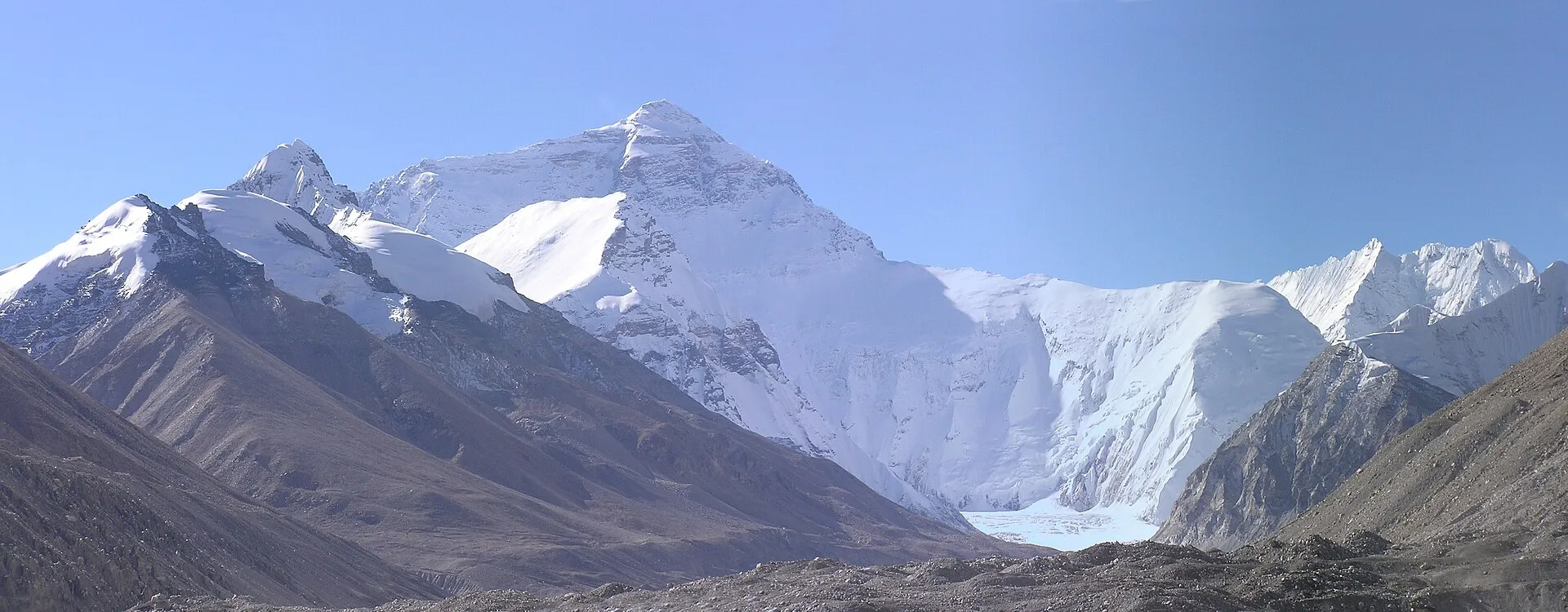 Everest’s north face from the Tibet-side Base Camp (~5,200 m) — spectacular, but the air here holds about half the oxygen of sea level. Altitude sickness (AMS) is common, even in fit, young travellers: headaches, breathlessness, nausea, dizziness and broken sleep typically hit in the first 24–48 hours.
To stay safe:
- Rest completely on day one — no hiking, no rushing, no alcohol; drink plenty of water.
- Ascend gradually and spend a couple of days acclimatising in Lhasa before going higher.
- Ask your doctor about acetazolamide (Diamox) before you travel, and bring any regular medication.
- Hotels and tour vehicles often keep oxygen on hand, and portable oxygen canisters are sold everywhere — useful for the first nights.
- Anyone with heart or lung conditions, or who is pregnant, should consult a doctor before going. If symptoms become severe (confusion, severe breathlessness, persistent vomiting), descend immediately and seek medical help — this is why proper travel insurance with evacuation cover matters here.
🏔️ Plan it through a specialist. Because everything hinges on the agency and permit, book a reputable Tibet tour operator well in advance. Day tours and longer Tibet itineraries are listed on Viator and Klook, or via dedicated Tibet agencies.
Getting to Lhasa by train
One of the world’s great rail journeys, the Qinghai–Tibet Railway (青藏铁路) is the highest railway on earth, cresting the Tanggula Pass at 5,072 m on its way to Lhasa. It’s a spectacular — and gentler — way to arrive.
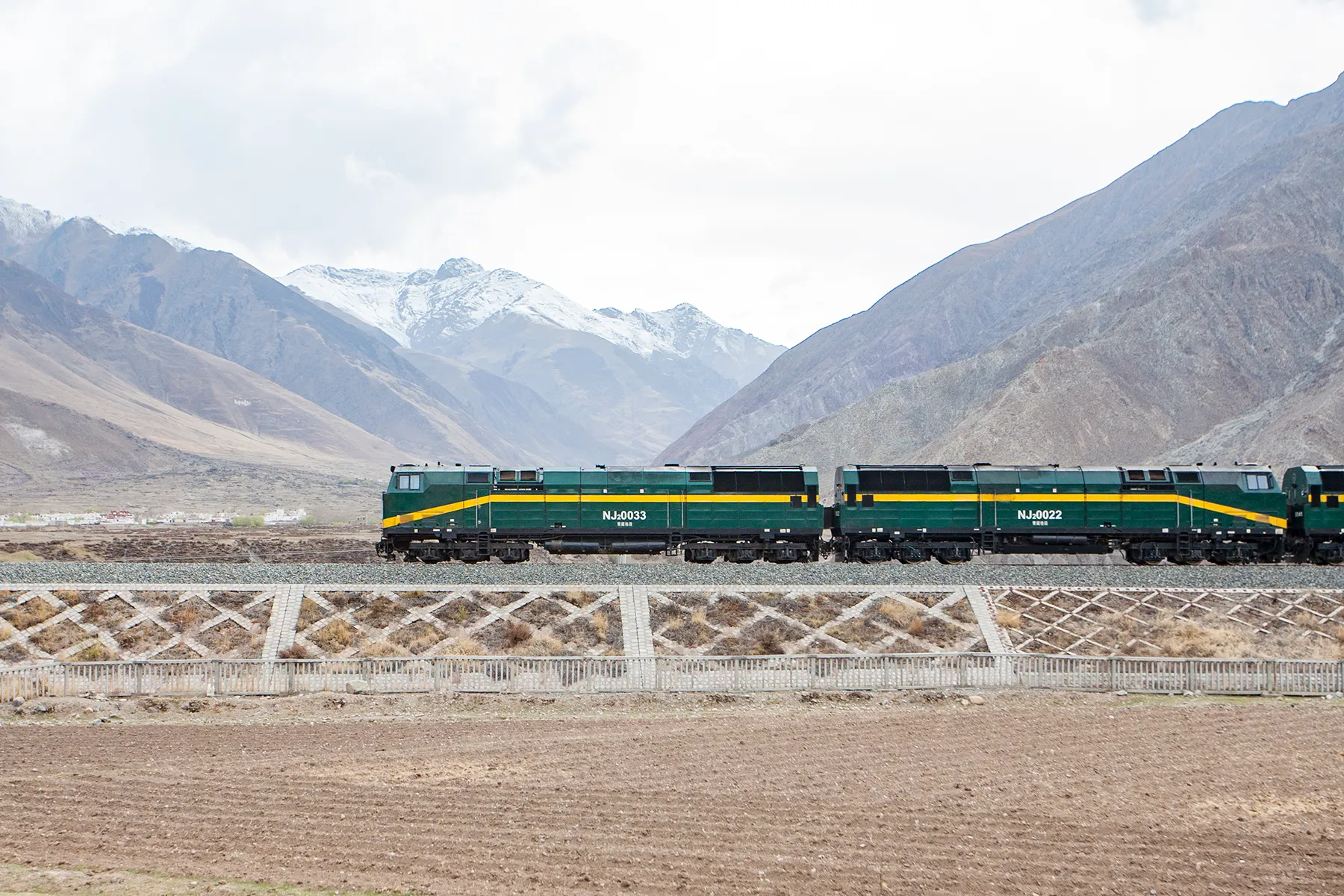 The Qinghai–Tibet Railway near Lhasa — the world’s highest railway, climbing over 5,000 m.
- Where the trains start. Direct services to Lhasa run from Beijing (~40 hrs), Shanghai (~47 hrs), Guangzhou (~53 hrs, the longest), Chengdu/Chongqing, Xi’an, Lanzhou and Xining. Xining is the real gateway — every Lhasa-bound train passes through it before the high-altitude section begins, and Xining–Lhasa is about 21 hours.
- Oxygen on board. The high-altitude carriages are oxygen-enriched and partly sealed, with a personal oxygen outlet at each berth — it helps, though you’ll still feel the thin air.
- Classes. Pick soft sleeper (4-berth, comfiest), hard sleeper (6-berth) or a seat for shorter legs. Soft sleepers sell out first.
- The scenery. Vast grasslands, the Kunlun range, the Hoh Xil wilderness with wild yaks and Tibetan antelope, frozen rivers and Cuona Lake — pure glued-to-the-window stuff.
🎫 Permit reminder: you still need your Tibet Travel Permit to buy the ticket and board a Lhasa-bound train — your tour agency arranges it. Book well ahead in summer; tickets and timetables are on Trip.com. Note these are conventional sleeper trains, not bullet trains (see the high-speed rail guide for how Chinese rail works generally).
Train vs flying: a flight to Lhasa is far faster but drops you straight to 3,650 m, while the train’s gradual climb is scenic and a little kinder for acclimatising — though it still tops 5,000 m, so it’s no cure for altitude sickness.
The permit-free alternative:
“Greater Tibet”
Here’s the insider tip: vast Tibetan cultural areas outside the TAR need no special permit at all and can be visited as freely as anywhere else in China. If the permit process feels daunting, head instead to:
- Western Sichuan — Kangding, Litang, Tagong, the Garzê grasslands.
- Shangri-La (Yunnan) — Songzanlin Monastery and Tibetan villages.
- Qinghai — Xining, Qinghai Lake, and the monasteries around it.
- Xiahe (Gansu) — the great Labrang Monastery.
You get soaring monasteries, prayer flags and Himalayan scenery — without a single permit.
Xinjiang:
open to independent travel — but heavily policed
Good news: foreigners can travel independently across most of Xinjiang. There’s no general permit, and the main sights — Ürümqi, Turpan, Kashgar, Heavenly Lake (Tianchi), Kanas — are open with just your standard Chinese visa or visa-free entry.
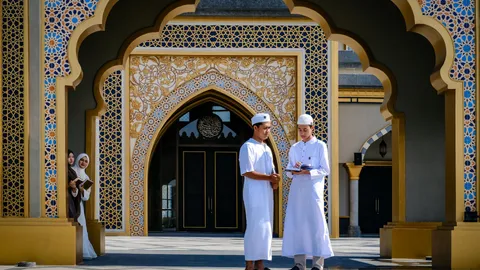
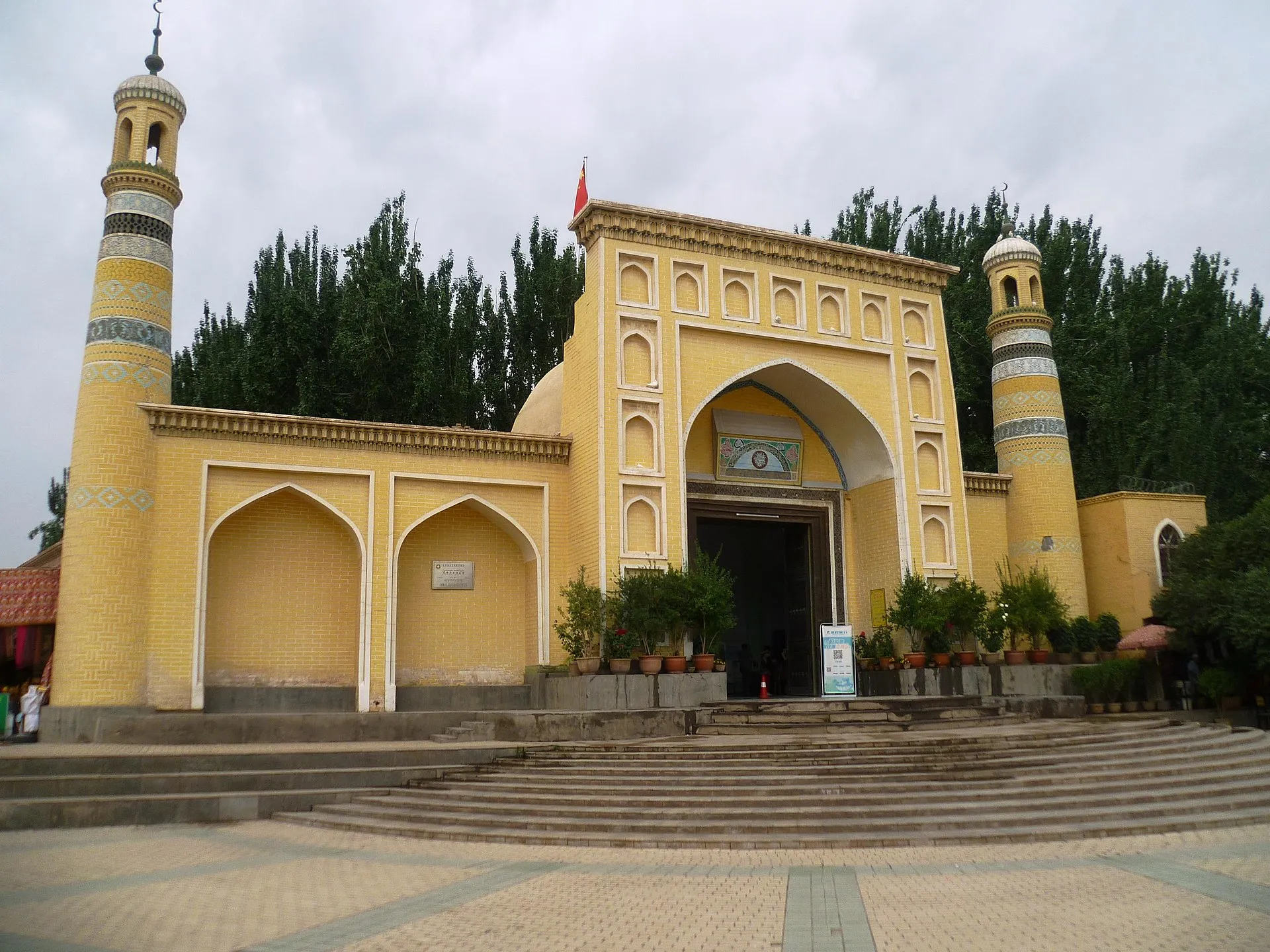 The Id Kah Mosque in Kashgar — the historic heart of China’s far west.
Beyond the cities:
Xinjiang’s stunning landscapes
Xinjiang isn’t only bazaars and old towns — it holds some of the most breathtaking scenery in all of China. The far north around Kanas (喀纳斯) is a wonderland of dense pine-and-birch forest threaded by impossibly clear, glacier-fed rivers the colour of jade. Further south, the snow-capped Tianshan (天山) mountains rise over wildflower grasslands and alpine jewels like Sayram Lake (赛里木湖). Add the Bayanbuluk grasslands, the dunes of the Taklamakan Desert, and the golden autumn forests of Hemu village, and you have a single province that swings from desert to glacier.
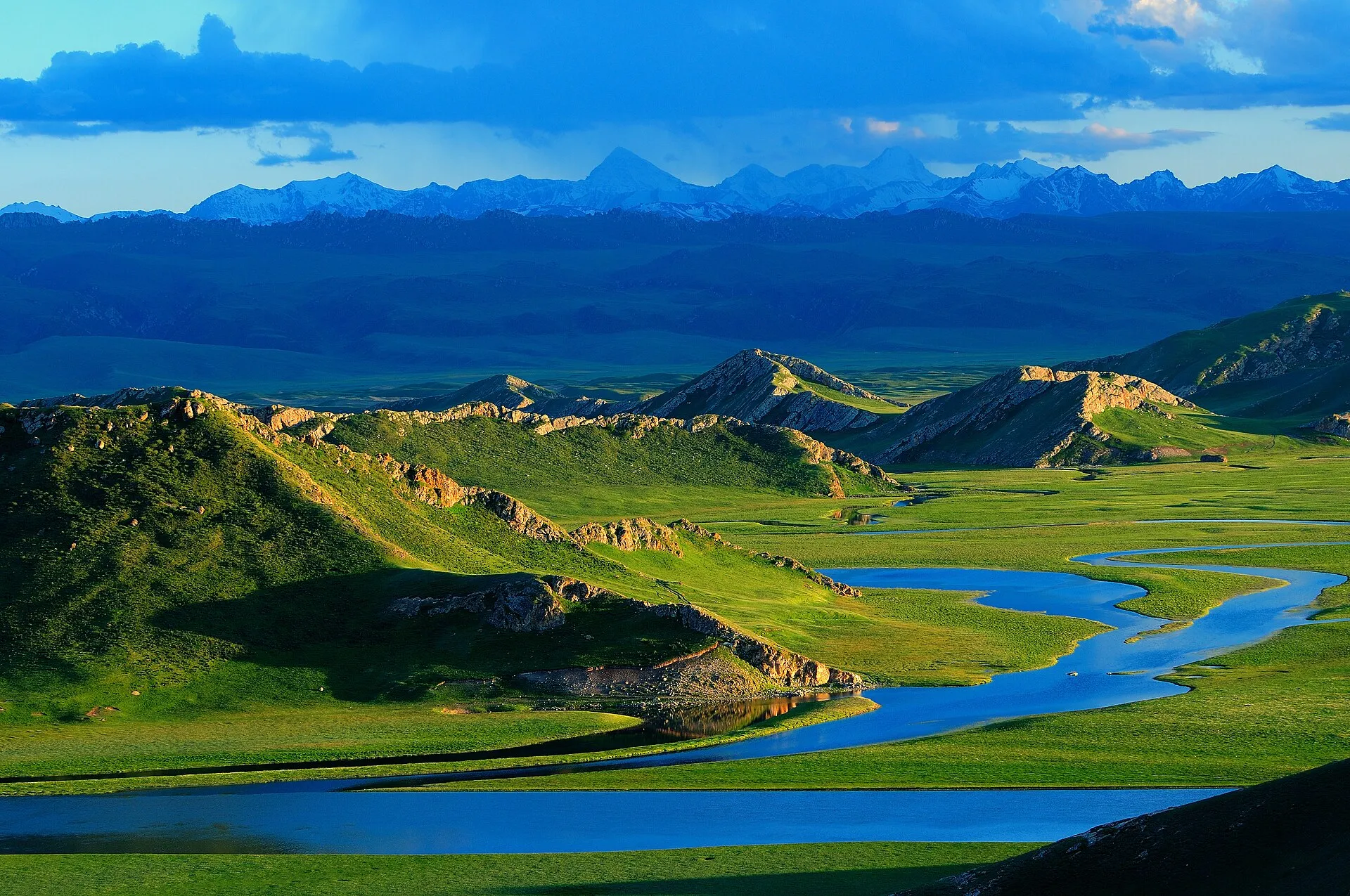 The Bayanbulak grassland (巴音布鲁克) — snow peaks, alpine meadow and a clear river winding to the horizon under a deep blue sky.
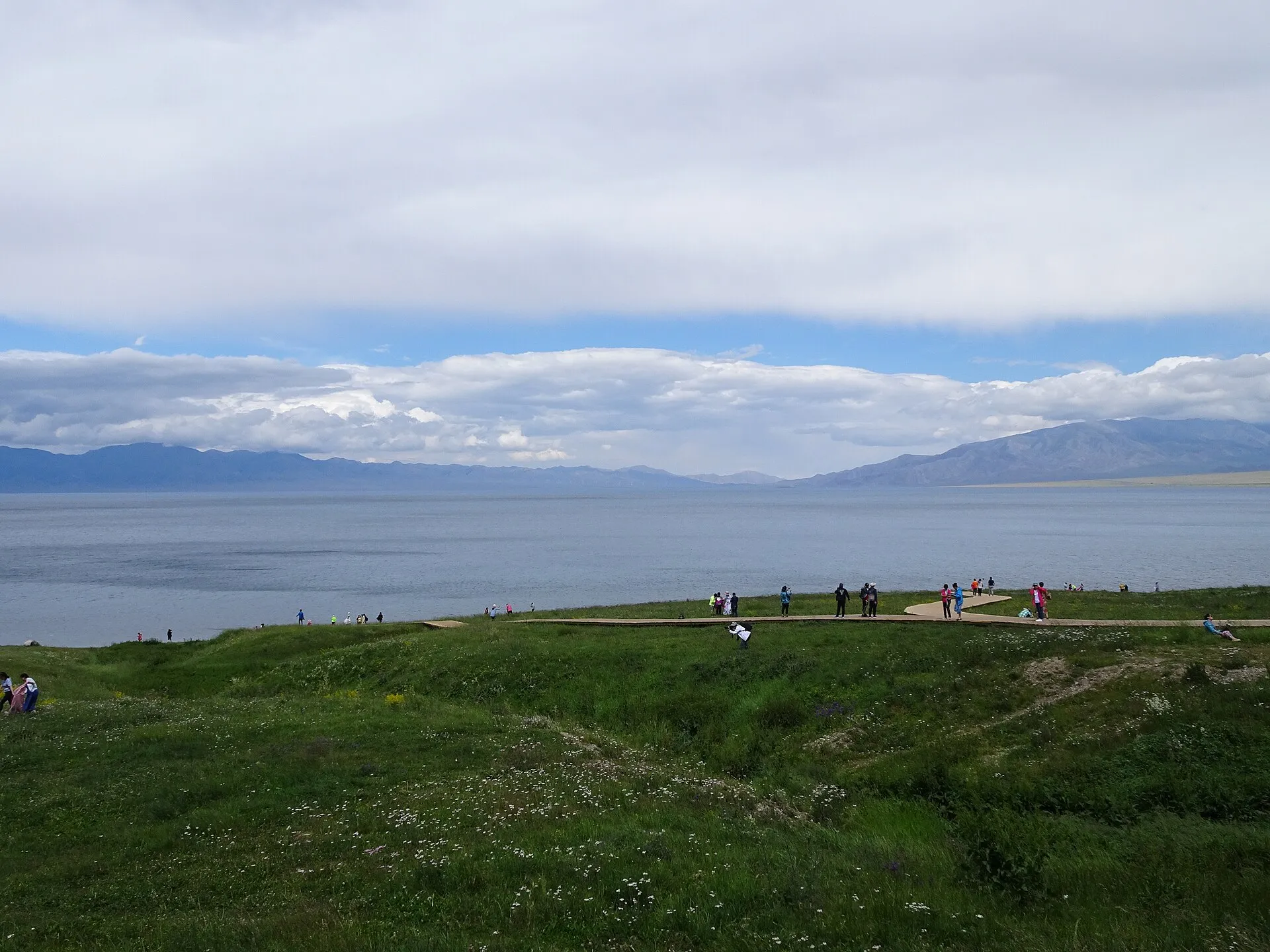 Sayram Lake (赛里木湖) — a high alpine lake ringed by Tianshan peaks and summer grassland.
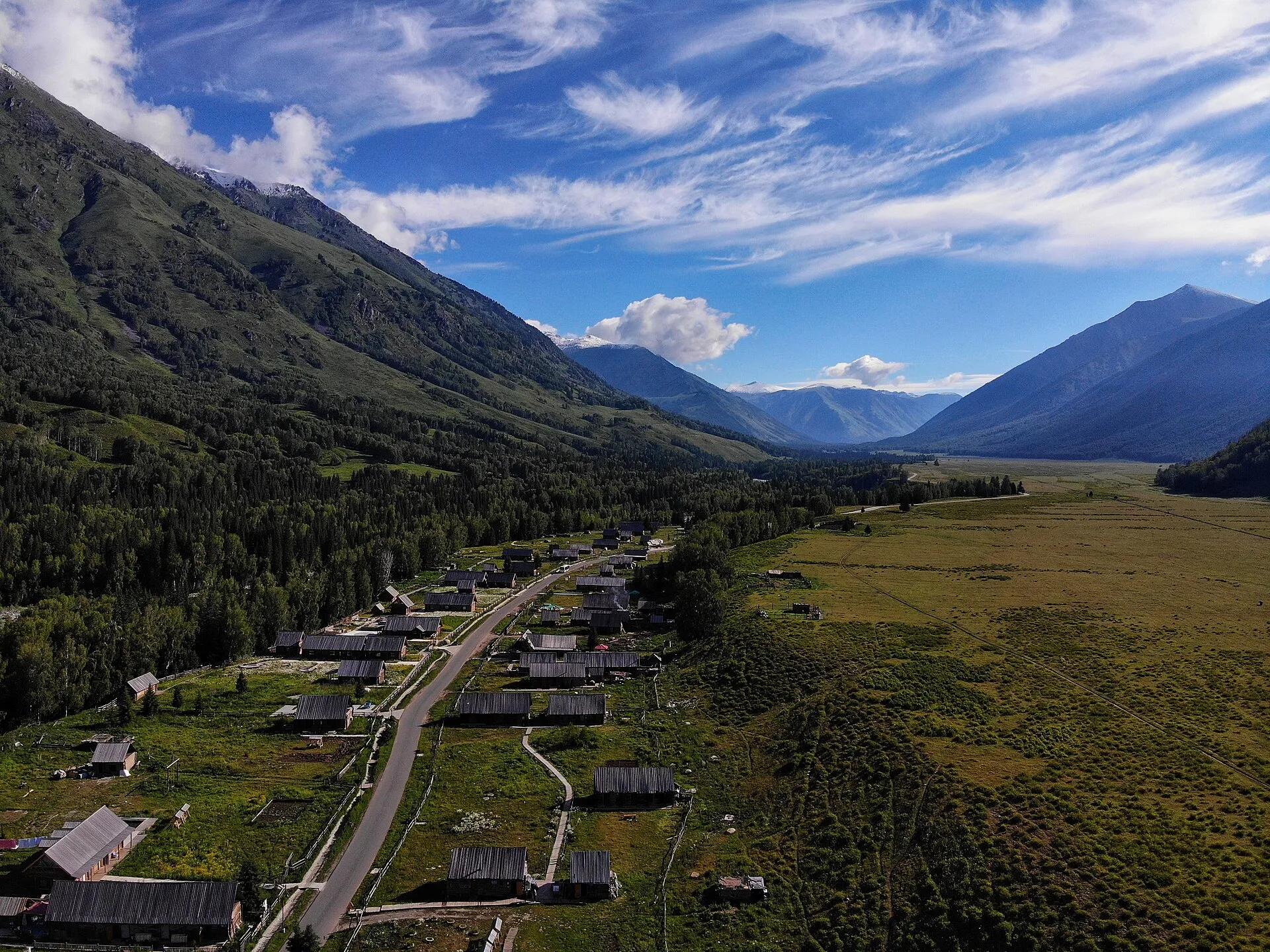 Hemu village (禾木) in its green summer valley — the Tuvan log-cabin hamlet that turns to famous golden forest in autumn.
The catch is the security environment. Be ready for:
- Frequent checkpoints — ID and passport scans at city gates, highways, stations, bazaars and many public buildings. Carry your original passport at all times.
- Security screening everywhere — airport-style scanners at markets, hotels and transport hubs slow everything down; build in extra time.
- Hotel registration — only certain hotels are licensed to accept foreigners, and they register you with the police at check-in. Book “foreigner-approved” hotels ahead (30–45 days for peak season is wise).
- Photography limits — never photograph checkpoints, police, or government/military buildings.
Where you do need a border permit
A handful of sensitive border areas require a separate permit (arranged locally or via an agency), including parts of the Karakoram Highway / Tashkurgan toward Khunjerab Pass, and certain border zones near Kanas (e.g. Baihaba). Lop Nur and some restricted zones are closed entirely.
Don’t leave without eating
Whatever the hassle of getting around, Xinjiang’s food is one of the best reasons to come. It’s hearty, halal, Central-Asian-influenced cooking: cumin-scented lamb skewers (羊肉串), hand-pulled laghman noodles (拉条子), polo (lamb pilaf), fresh-baked naan (馕), and the legendary big-plate chicken (大盘鸡) — chicken, potato and hand-torn noodles in a fiery, savoury sauce.
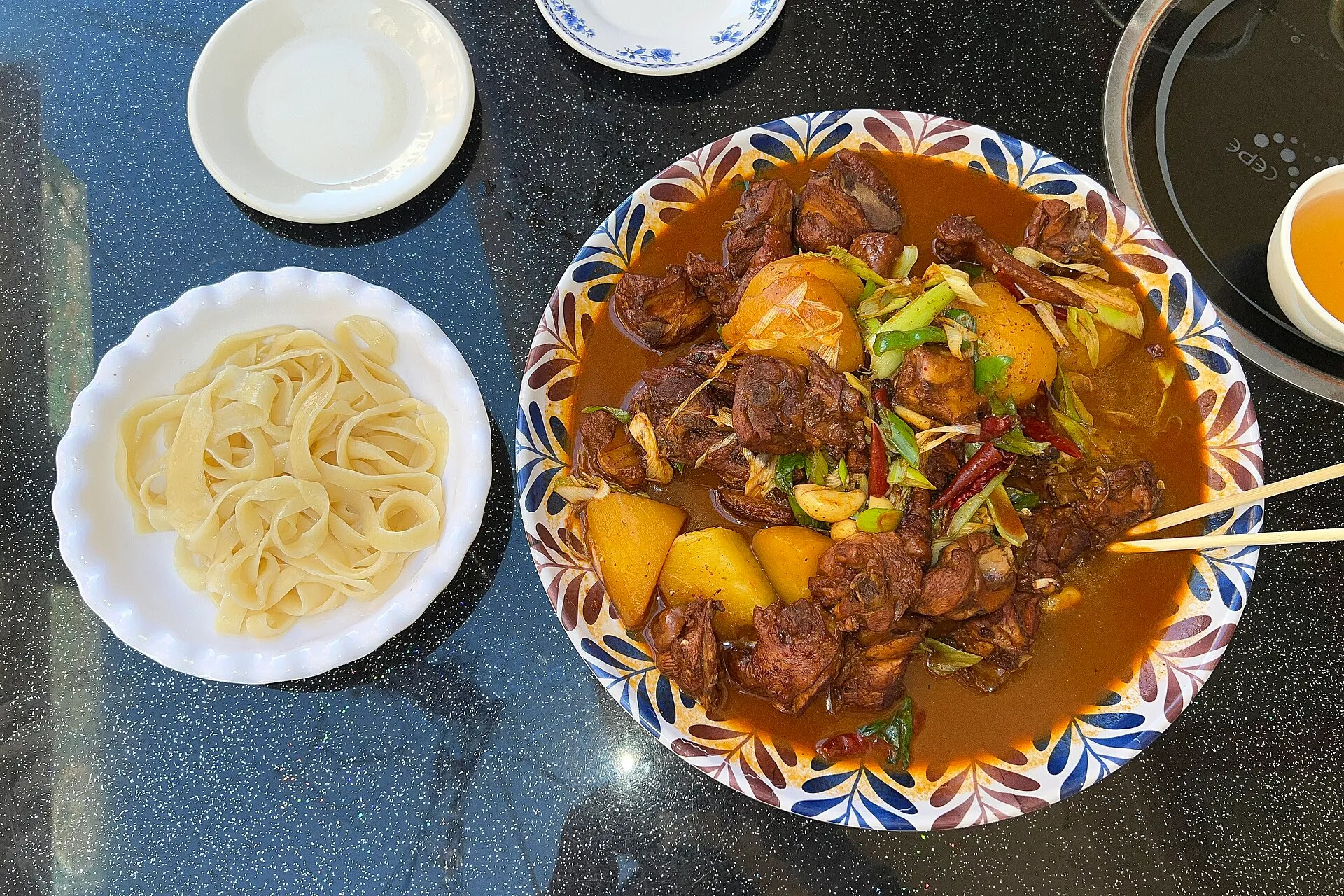 Big-plate chicken (大盘鸡) with its classic side of wide noodles to soak up the sauce.
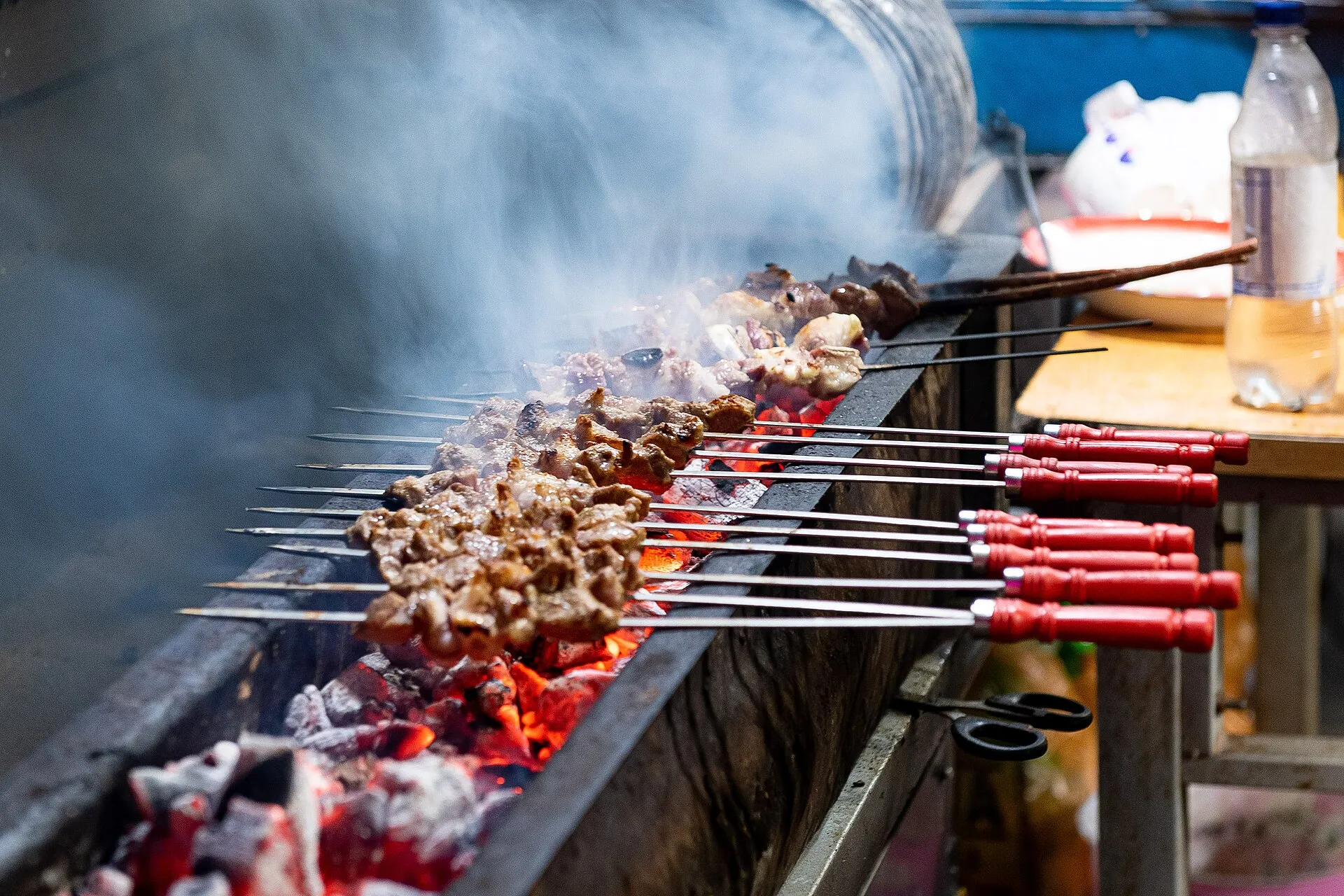 Lamb skewers (羊肉串) sizzling over charcoal in Kashgar — Xinjiang’s signature snack.
Fruit so sweet it’s legendary
Xinjiang’s blazing sun, bone-dry air and cool desert nights make its fruit some of the sweetest in China — a point of real local pride. Eating your way through a bazaar’s fruit stalls is half the fun:
- Turpan grapes (吐鲁番葡萄) — the Turpan basin is China’s grape capital, growing dozens of varieties (try the slender green “mare’s-nipple” grapes). Dried in airy mud-brick sheds, they become the famous Xinjiang raisins.
- Hami melon (哈密瓜) — the honey-sweet, fragrant Central Asian cantaloupe named after the city of Hami.
- Watermelon — huge and intensely sugary, sold in roadside heaps all summer.
- Korla fragrant pears (库尔勒香梨), plus apricots, figs, pomegranates, mulberries and jujube dates.
- Dried fruit & nuts — bazaar tables overflow with raisins, dried apricots and figs, walnuts and almonds — the perfect packable snack or souvenir.
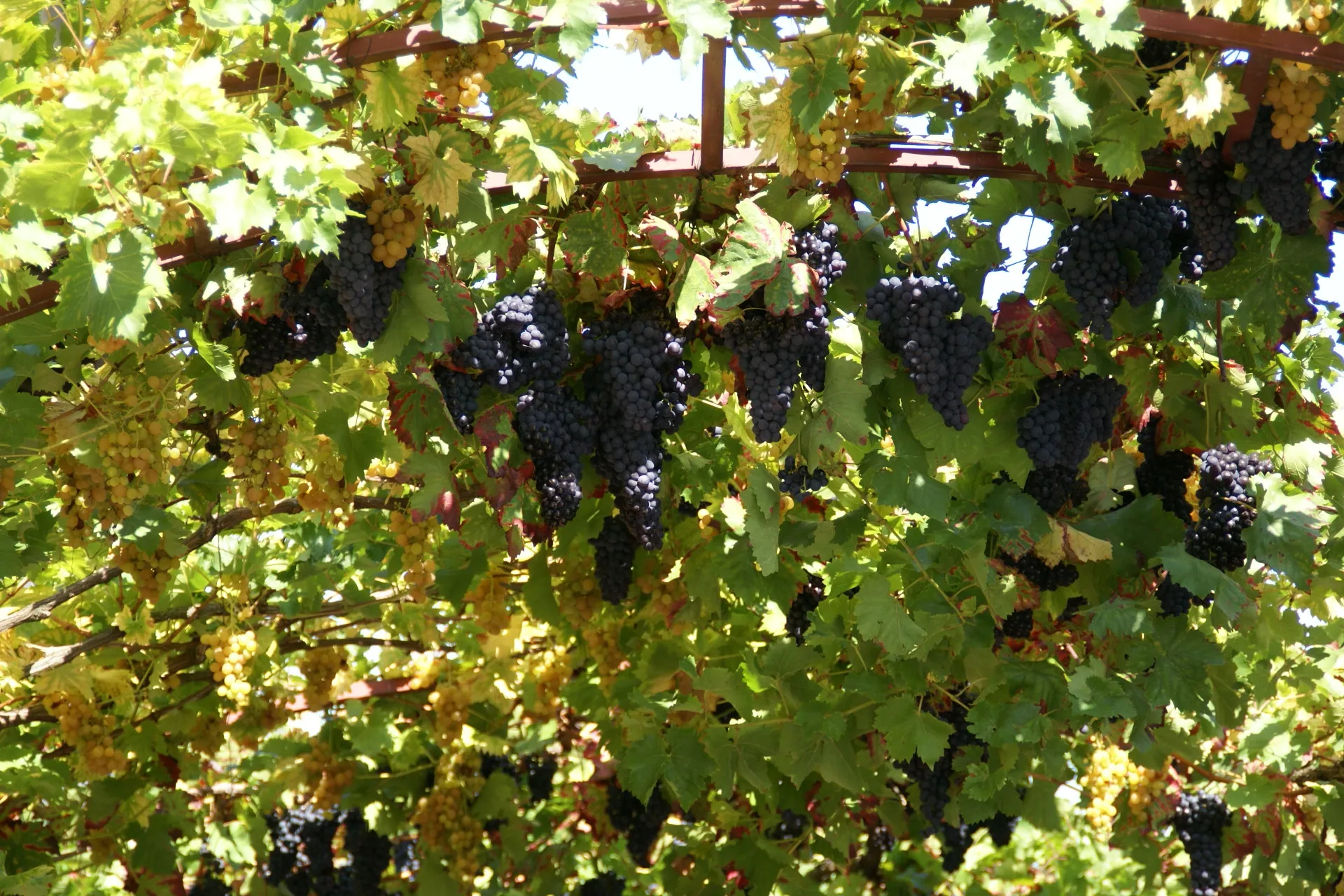 Bunches of ripe grapes hanging from a sun-drenched vine arbor — Xinjiang’s oasis vineyards hang heavy like this at harvest.
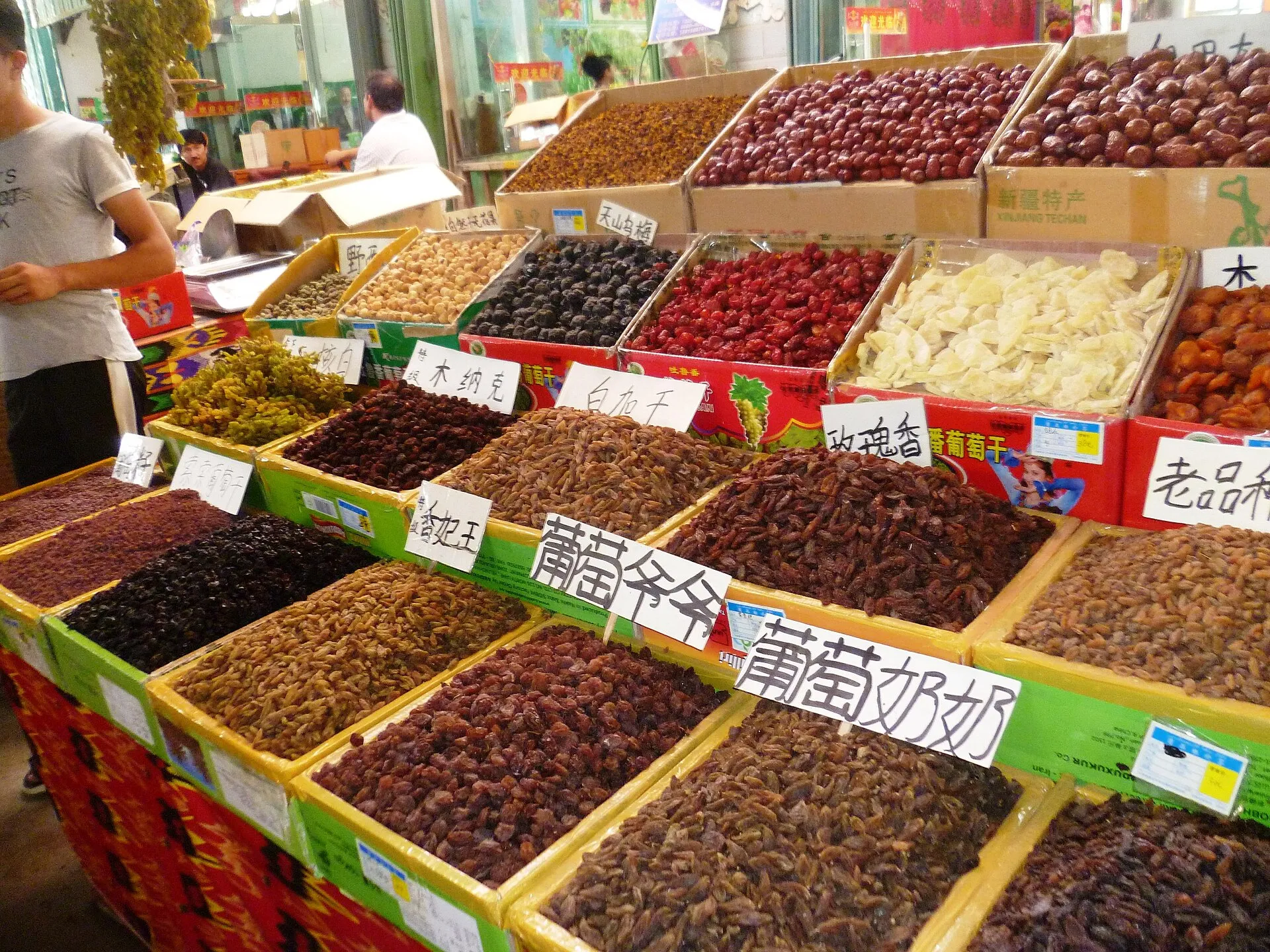 Bins of Xinjiang raisins, dates and dried fruit at a Turpan bazaar — dozens of varieties, sweet, cheap and easy to take home.
Practical tips for both
- Travel insurance with strong medical/evacuation cover is wise for high-altitude Tibet and remote Xinjiang — see the insurance guide.
- Acclimatise to Lhasa’s 3,650 m altitude — take it slow the first day or two.
- Trains and flights to both regions are bookable on Trip.com; see the high-speed rail and domestic flights guides.
- Check your government’s latest travel advice before you book.
The bottom line
Tibet = absolutely worth it, but accept that it’s a permitted, guided experience you arrange weeks ahead (or visit permit-free Tibetan Sichuan/Yunnan instead). Xinjiang = independent and rewarding, but pack patience for checkpoints and book foreigner-ready hotels. Both reward the effort with some of the most extraordinary landscapes and cultures in all of China.