China’s regional cuisines are ancient — but its creative dining scene is brand new and exploding. In barely a decade, cities like Shanghai, Beijing and Shenzhen have grown some of Asia’s most exciting restaurants, led by a generation of chefs reinventing Chinese food with global technique and a point of view. It runs the full spectrum: from avant-garde, three-star tasting menus to packed little Chinese-Western fusion bistros where the cooking is just as inventive but the vibe is loose and the bill is friendlier. If you think you know Chinese food, this will surprise you.
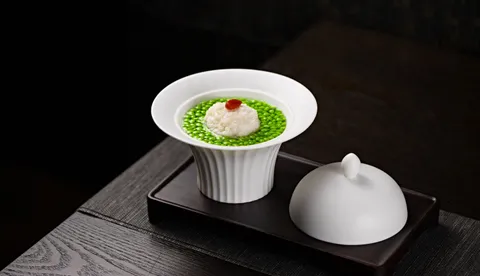
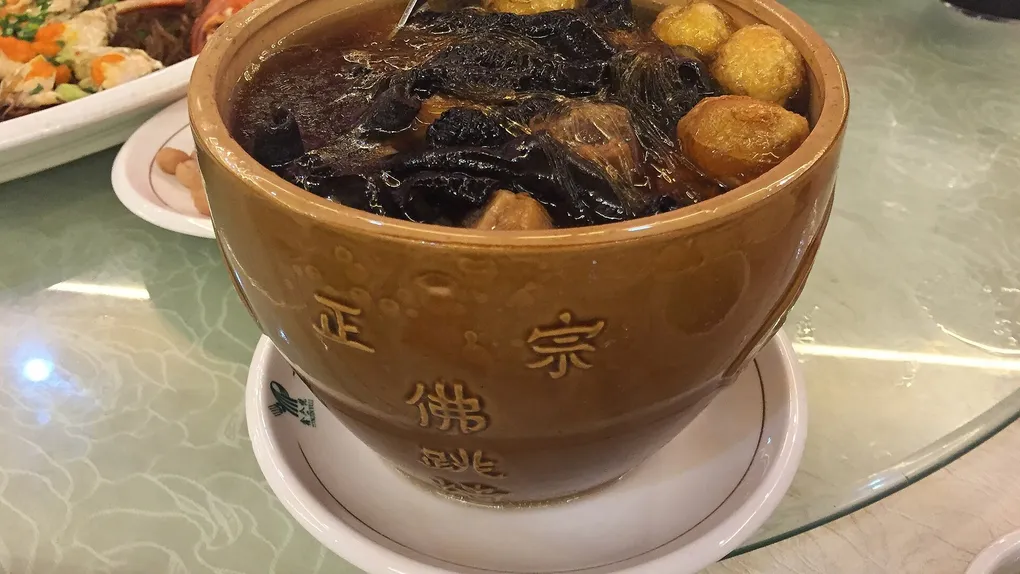
Luxury classics like Buddha Jumps Over the Wall (佛跳墙) are being reimagined by a new wave of Chinese chefs.
What is “new Chinese” fine dining?
It goes by several names — modern Chinese, new Chinese (新中式 / 新派中餐), or Chinese fusion — but the idea is consistent: take China’s deep culinary tradition and present it through a contemporary, often Western-influenced lens. In practice that means degustation (tasting) menus, refined plating, wine or tea pairings, and a chef’s creative point of view, applied to flavours that are unmistakably Chinese.
It’s distinct from a classic banquet. A traditional Cantonese or Huaiyang restaurant serves shared dishes on a lazy Susan; a modern fine-dining room serves a personal, multi-course story — and charges accordingly.
The styles you’ll encounter
- Refined regional — a single regional cuisine (Sichuan, Cantonese, Chaoshan, Huaiyang) elevated to tasting-menu precision with luxury ingredients.
- Chinese-Western fusion — Chinese flavours built with French or Japanese technique, or Western dishes reimagined with Chinese ingredients.
- Avant-garde / molecular — playful, experimental, multi-sensory cooking that deconstructs familiar tastes.
- Modern vegetarian — temple-inspired plant-based cooking turned into genuine haute cuisine (a real Chinese speciality).
Where to eat in Shanghai, by price
Shanghai is the undisputed capital of this scene. Ratings and openings shuffle constantly, so treat these as an orientation and confirm before booking — but here’s the lay of the land, from haute tasting menus to buzzy little bistros.
Splurge — haute tasting menus (≈¥1,000–2,500+ per person)
- Fu He Hui (福和慧) — exquisite, Michelin two-starred modern vegetarian, served as a serene tasting menu.
- Amazing Chinese Cuisine (菁喜荟) — refined, high-end Chaoshan (Teochew) cooking that’s climbed to two Michelin stars.
- Tou Zao (头灶) — a single-seating, prix-fixe contemporary Cantonese room (a Michelin one-star) where the kitchen shows off extreme wok-hei heat control and pastrywork finished in front of you.
- Ling Long (玲珑) — modern Chinese storytelling built on Chinese ingredients; one of the city’s most talked-about young tables (a Michelin one-star).
Creative bistros — mid-range (≈¥300–800 per person)
This is the heart of Shanghai’s Chinese-Western fusion and modern Chinese bistro scene — small, design-led, impossibly busy rooms run by young chefs who blend regional home cooking with Western technique. Some of the hardest tables in town to land:
- gubigubi — a charming Ningbo-fusion bistro in a baby-blue lane house in the former French Concession; a runaway hit since 2024, with seafood Ningbo rice cakes, grilled Zhoushan mackerel and shepherd’s-purse shaomai. Expect a queue.
- Bastard — as irreverent as the name suggests: hip, contemporary mod-Chinese small plates in Jing’an, beloved by the city’s young dining crowd.
- Rong (融) — the name literally means “to fuse,” and that’s the philosophy: Chinese flavours and Western technique melded onto one plate.
- Hua Man Lin (花满林) — a creative Chinese bistro in the same spirit — inventive, seasonal and built for sharing.
For the full, current picture, cross-reference the Michelin guide to China and the home-grown Black Pearl guide — where both point to the same restaurant, book with confidence.
What to expect
- Tasting menus of 6–12+ courses are the norm; allow 2–3 hours.
- Price: roughly ¥800–1,500 per person at the accessible end, ¥2,000–4,000+ at the very top — still often less than equivalent rooms in Europe or the US.
- Pairings: wine lists are serious, but many rooms also offer a tea pairing, which suits Chinese flavours beautifully and keeps the bill (and your head) lighter.
- Dress smart-casual and arrive on time — single-seating kitchens won’t hold a course for latecomers.
How to book
This is the catch for visitors: the best tables book up weeks ahead, and many take reservations only through Chinese apps or by phone, often requiring a Chinese phone number. Luxury-hotel restaurants (like Fu He Hui) are the easiest to book through a concierge or by email; for the bistros, ask your hotel to help you reserve through a Chinese app.
🤝 Can’t secure the table? If there’s a restaurant you’re set on but the booking needs a local number or a Chinese-only app, contact us and we can help arrange it (a small service fee applies).
My honest take
You don’t need a tasting menu to eat brilliantly in China — some of your best meals will be street food and Bib Gourmand holes-in-the-wall. But if a special-occasion dinner is on your list, China’s new fine-dining wave is genuinely world-class, frequently more inventive — and better value — than its Western peers. Pair this with my regional food guide and you’ll eat as well as anywhere on earth.
FAQ
What is “new Chinese” or fusion fine dining? It’s modern, often Western-influenced fine dining built on Chinese cuisine — tasting menus, refined plating and creative technique applied to Chinese flavours, rather than traditional shared banquet dishes.
How much does Chinese fine dining cost? Roughly ¥800–1,500 per person at the accessible end and ¥2,000–4,000+ at the top — generally less than equivalent restaurants in Europe or North America.
Do I need to book in advance? Yes — top tables fill weeks ahead and often require a Chinese phone number or app to reserve. Hotel-based restaurants are the easiest for visitors to book.