Let’s get one thing straight first: nothing on this list is actually “weird” in China — these are normal, often beloved foods, eaten by millions every day, with centuries of history behind them. “Weird” is purely from a first-time foreign perspective. With that respect noted… some of them will test your nerve.
🫣 Read the title twice. Only dive in if you’re genuinely mentally ready — or if you actively want to challenge yourself. If you’re squeamish, scroll gently. No shame in sticking to dumplings.
Here’s the field, sorted by how much courage it takes.
Level 1 — Gateway “weird” (you’ll probably love these)
Start here. These look or smell unusual but taste great.
- Century egg (皮蛋) — a preserved duck egg with a translucent black “jelly” white and a creamy dark-green yolk. Smells of ammonia, tastes rich and savoury; brilliant with congee or tofu.
- Stinky tofu (臭豆腐) — fermented tofu that smells like a gym bag and tastes savoury, crispy and addictive. The Changsha (black) and Hangzhou styles are classics.
- Chicken feet (凤爪) — braised in black-bean sauce at dim sum; all skin, gelatin and flavour. Fiddly, but locals adore them.
- Luosifen (螺蛳粉) — Guangxi’s pungent fermented-snail rice noodles. Smells shocking, tastes deeply savoury and sour-spicy — a genuine cult favourite.
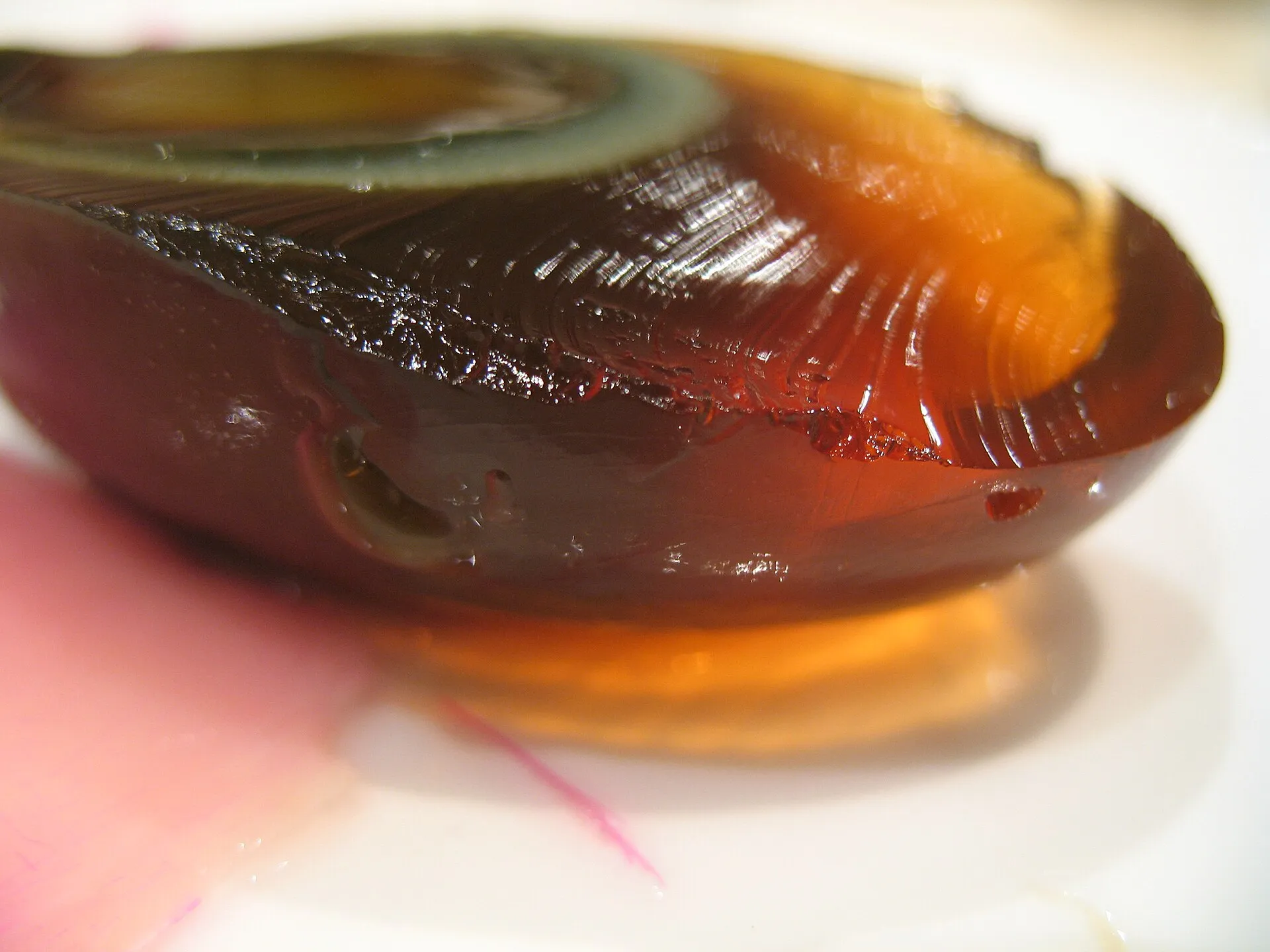 Century egg (皮蛋) — preserved until the white turns to dark jelly and the yolk goes creamy.
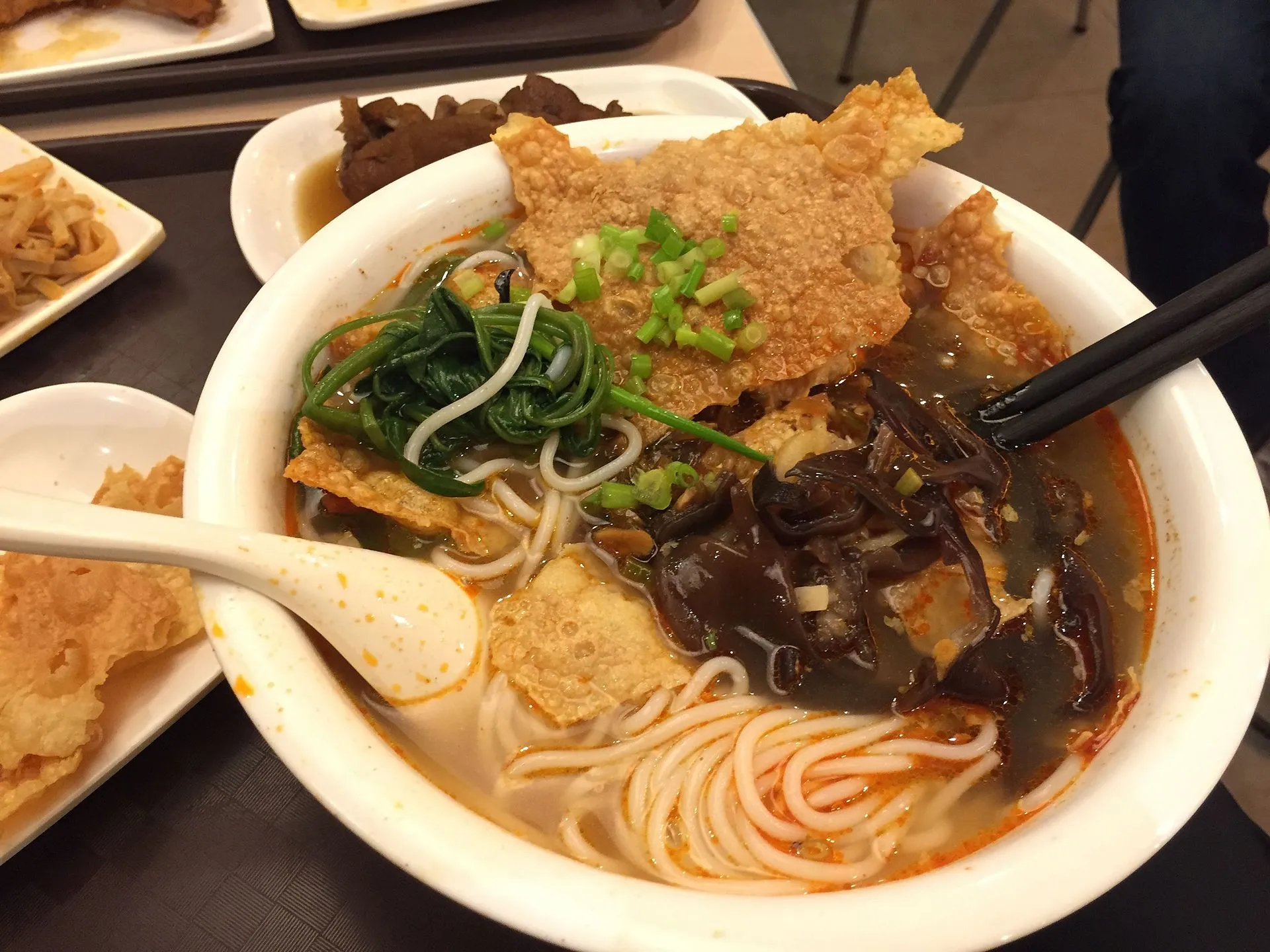 Luosifen (螺蛳粉) — fermented-snail rice noodles; the smell is the point.
Level 2 — A real challenge (texture and concept get tougher)
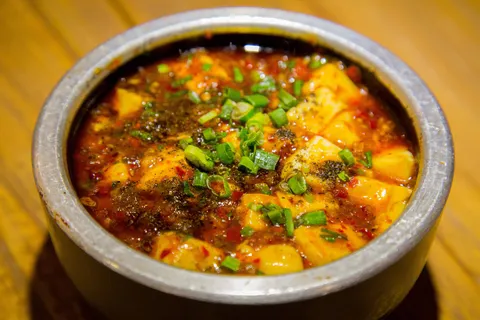
- Duck blood (鸭血) — soft, tofu-like cubes of congealed blood in hotpot and soups (毛血旺). Mild-tasting, but the idea stops many people.
- Pig brain (脑花) — custard-soft brain poached in spicy hotpot; silky and rich if you can get past what it is.
- Rabbit head (兔头) — a Chengdu street obsession: spicy, numbing, and eaten by picking the head apart with your hands.
- Pork intestine (肥肠) — chewy, deeply savoury offal, braised or in 卤煮; an acquired but rewarding taste.
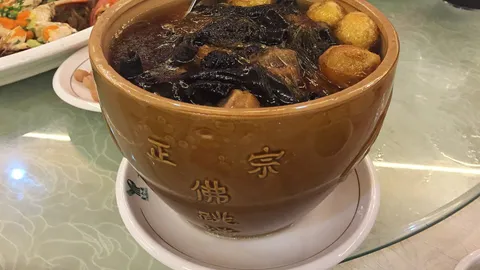
- Fish mint / zhe’ergen (折耳根) — a Guizhou/Sichuan herb with a fishy-metallic punch that locals love and outsiders often can’t.
- Douzhi (豆汁) — Beijing’s fermented mung-bean drink: sour, funky, and famously divisive even among Chinese.
Level 3 — Only for the truly brave
You really don’t have to. But if you’re chasing the story…
- Live “drunken” shrimp (醉虾) — fresh shrimp served still twitching in rice wine. You eat them live.
- Fertilised duck egg (活珠子 / 毛蛋) — a part-developed egg, China’s relative of balut. Not for the faint-hearted.
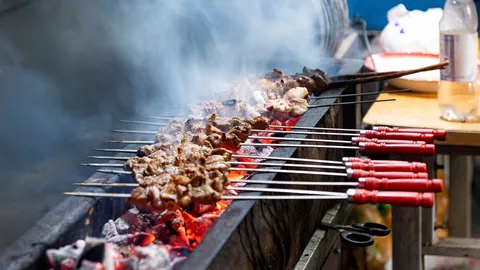
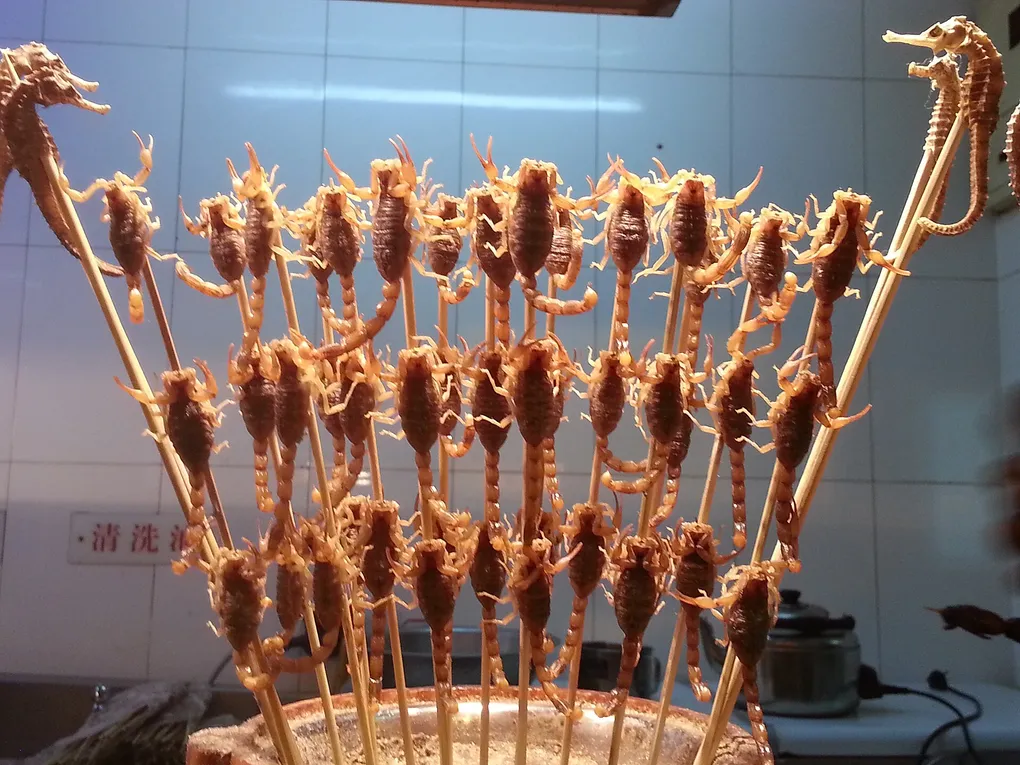
- Insect & scorpion skewers — fried silkworm pupae (蚕蛹), grasshoppers, and the scorpions-on-a-stick of Beijing’s tourist snack streets. Crunchy, mostly novelty.
- Snake (蛇羹) — snake soup, a warming Cantonese winter delicacy.
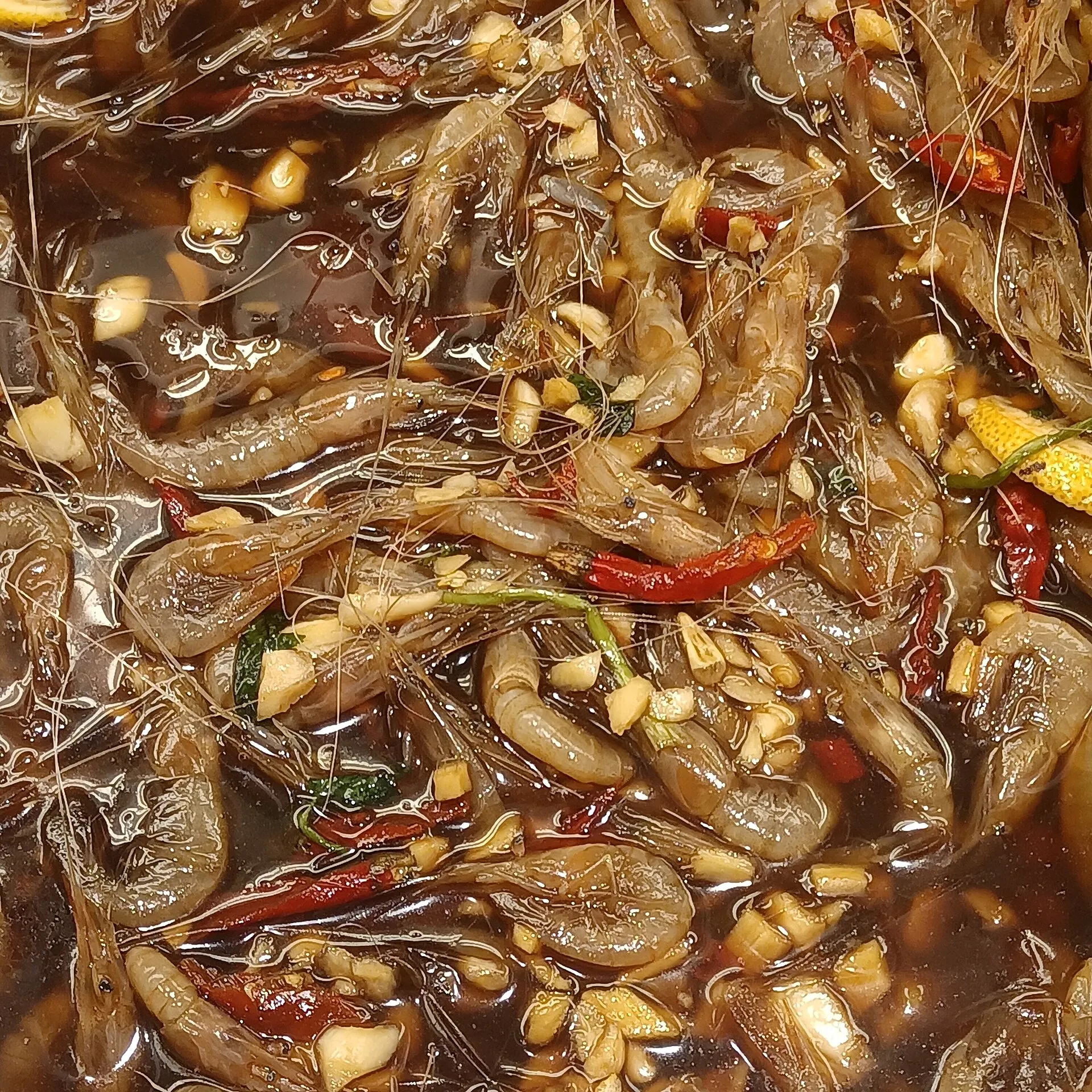 Drunken shrimp (醉虾) — served live in rice wine. Yes, they move.
How to be brave (without regrets)
- Start at Level 1 and work up — don’t open with live shrimp.
- Order with locals or at busy, reputable places — freshness matters most with offal and seafood.
- Take a small portion or share, so a miss isn’t a whole meal wasted.
- Separate the idea from the taste — close your eyes for the first bite; many “weird” foods are genuinely delicious.
- Know how to ask for the milder/cooked version, and pick truly fresh stalls (see street food safety).
The honest truth
Most of these “weird” foods are weird only because they’re unfamiliar — to a local they’re comfort food, history and pride on a plate. Trying one with an open mind (and a good sport’s attitude) is one of the most memorable things you can do on a China trip. Just remember the title: don’t try unless you’re ready — or unless you really want to challenge yourself.