Sichuan (Szechuan) cuisine is China’s most famous for a reason — it’s bold, layered and built around the unique málà (麻辣) sensation: the numbing tingle of Sichuan peppercorns combined with chilli heat.
What to order
- Hotpot (火锅) — a bubbling, spicy cauldron you cook at the table; the region’s social signature.
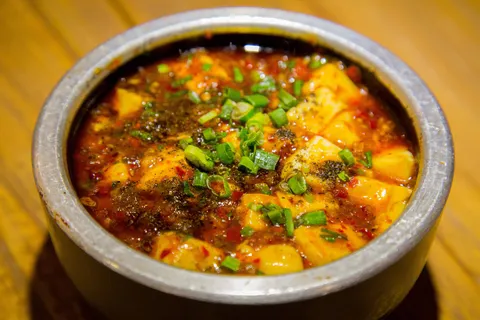
- Mapo tofu (麻婆豆腐) — silken tofu in a fiery, numbing sauce.
- Dan dan noodles (担担面) — chilli-oil noodles with minced pork.
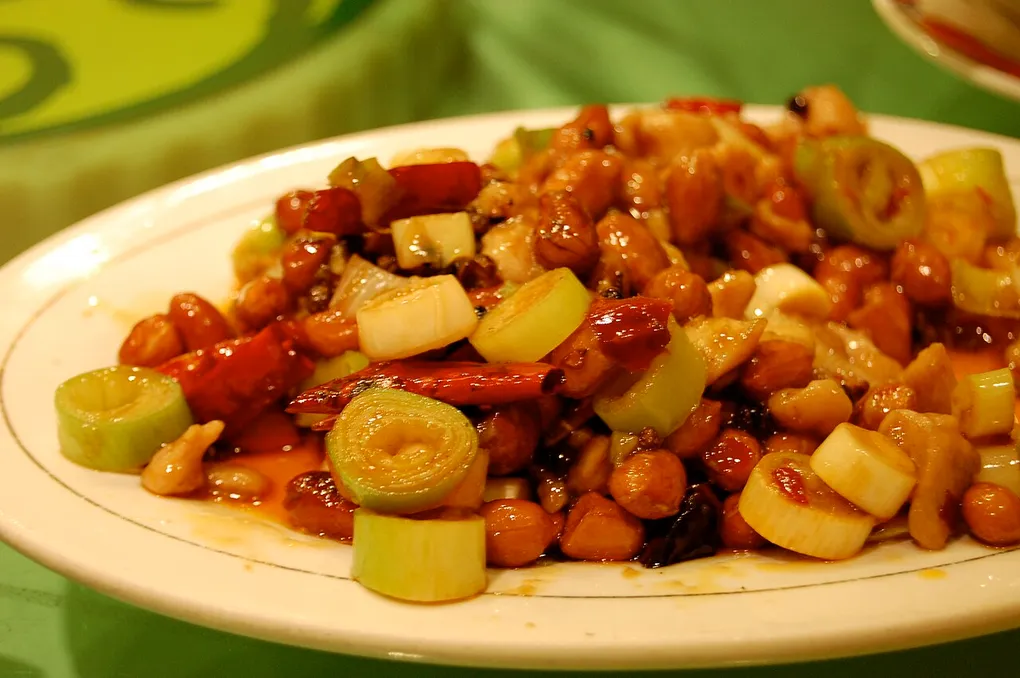
- Kung pao chicken (宫保鸡丁) — with peanuts and dried chillies.
- Twice-cooked pork (回锅肉) and mouth-watering chicken(口水鸡) - most authentic hot/old plates.
Not everything is spicy
Here’s what surprises first-timers: Sichuan also has a refined, gentle side, with plenty of dishes that carry no chilli at all — ideal if you need a break from the málà:
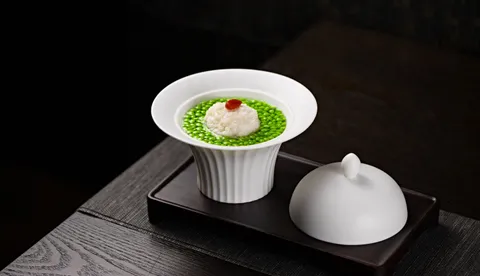
- Boiling-water cabbage (开水白菜, kāishuǐ báicài) — a banquet masterpiece: a cabbage heart floating in a crystal-clear, deeply savoury chicken-and-ham consommé. It looks like plain water and tastes profound.
- Old Mom’s trotter soup (老妈蹄花, lǎomā tíhuā) — pork trotters slow-simmered with white beans until meltingly soft, served with a light dipping sauce; a beloved Chengdu late-night comfort food.
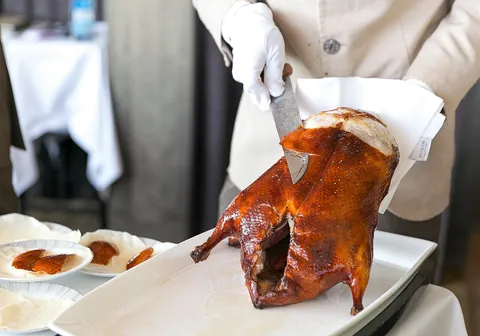
- Sweet-skin duck (甜皮鸭, tiánpí yā) — roast duck lacquered in a glossy, lightly sweet caramel glaze; a Leshan and Sichuan specialty that’s all fragrance, no heat.
- Bingfen (冰粉) — a chilled, jiggly ice jelly topped with brown-sugar syrup, fermented rice, peanuts and fruit; the perfect cooling dessert after a fiery meal.
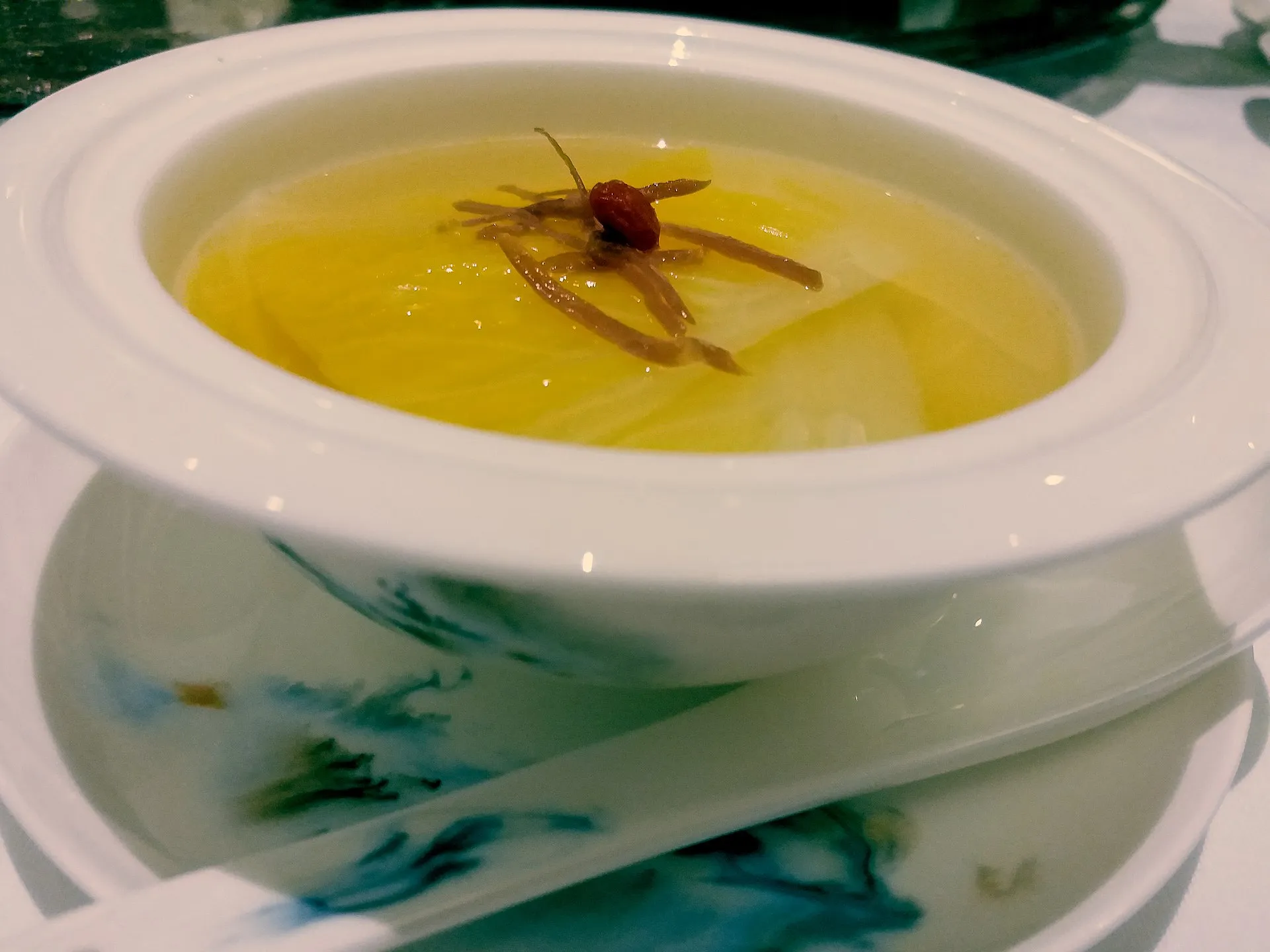 Boiling-water cabbage (开水白菜) — the cabbage hearts arranged like a flower in a crystal-clear consommé; looks like plain broth, tastes like a banquet.
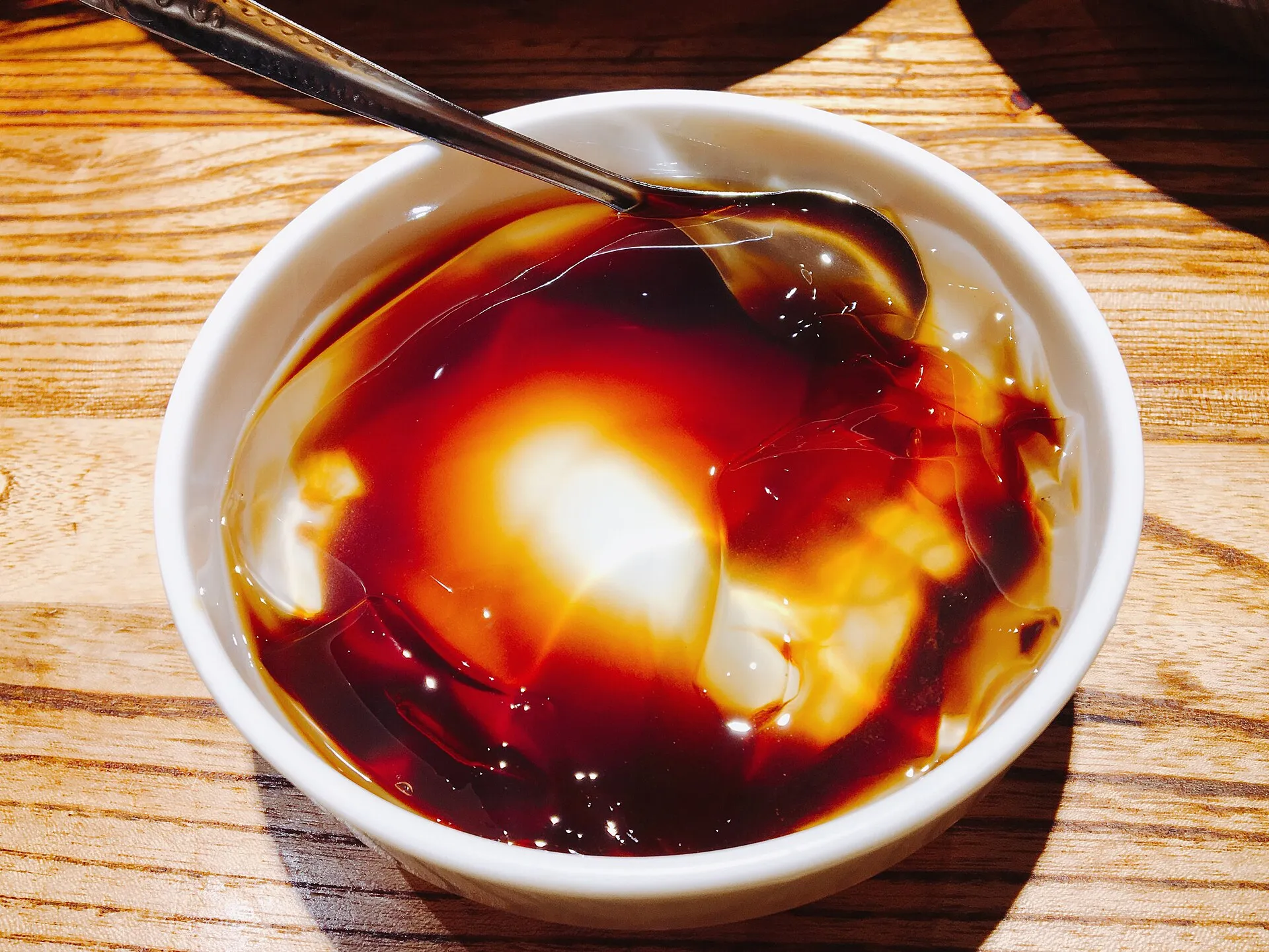 Brown-sugar bingfen (红糖冰粉) — chilled, jiggly ice jelly under dark brown-sugar syrup; the perfect chilli-free cooldown after hotpot.
Where to eat it
The heartland is Chengdu and Chongqing, but great Sichuan restaurants are everywhere in China.
The most authentic places (always worth confirming hours/branches before you go):
- Chengdu — Chen Mapo Tofu (陈麻婆豆腐): the original house, founded in 1862, where mapo tofu was invented — a “China Time-Honored Brand” and Michelin Bib Gourmand. The real, full-strength version.
- Chengdu — Shu Jiu Xiang (蜀九香): a beloved local hotpot name for a proper málà cauldron.
- Chongqing: the birthplace of fiery old-style hotpot (老火锅) — pick any busy, smoke-filled local house and order a split pot if you’re new to the heat.
Tips
- “Micro-spicy” still means spicy — ask for mild (bù là, 不辣) if unsure.
- The peppercorn numbness is normal and part of the experience.
- Hotpot is best shared — order a split pot (spicy + mild broth) if you’re new to it.
- See how to order without Chinese.