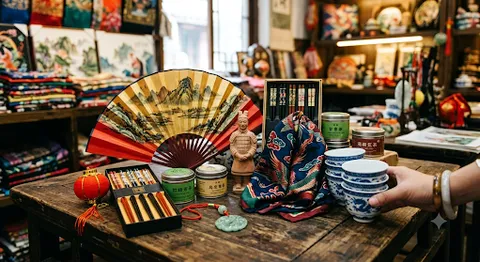
Most of what you’ll want to take home — tea, silk, ceramics, snacks — is completely fine to pack and fly out with. But a few categories of souvenir are restricted or outright banned from leaving China, and travellers do get them confiscated at the airport. The classic trap is a beautiful “antique” or an old ethnic-minority costume bought in good faith at a market.
Here’s the short list to be careful with, and how to buy so your souvenirs actually make it home.
Antiques & cultural relics — the big one
By law, anything made before 1949 counts as a cultural relic (文物) in China, and you cannot simply pack it in your suitcase. Genuine relics need an official appraisal and a red lacquer export seal (火漆标志) applied by the provincial Cultural Relics Bureau, plus the matching certificate — without it, customs can and do seize the item. Anything judged to predate 1911 is generally prohibited from export altogether, no seal available.
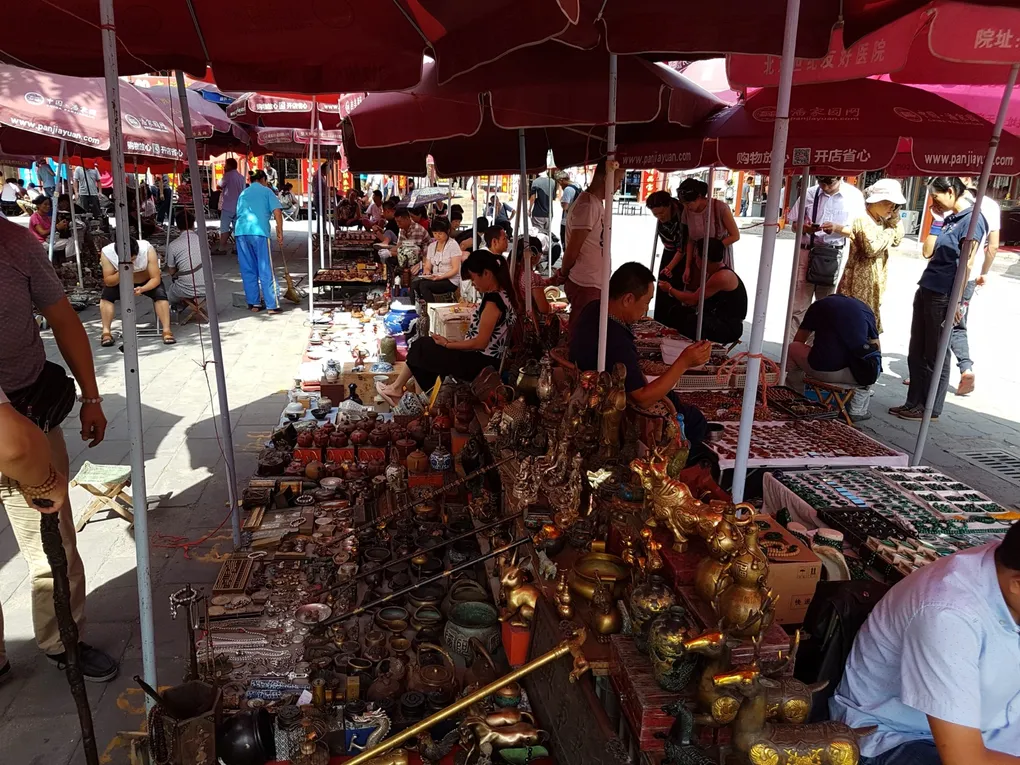
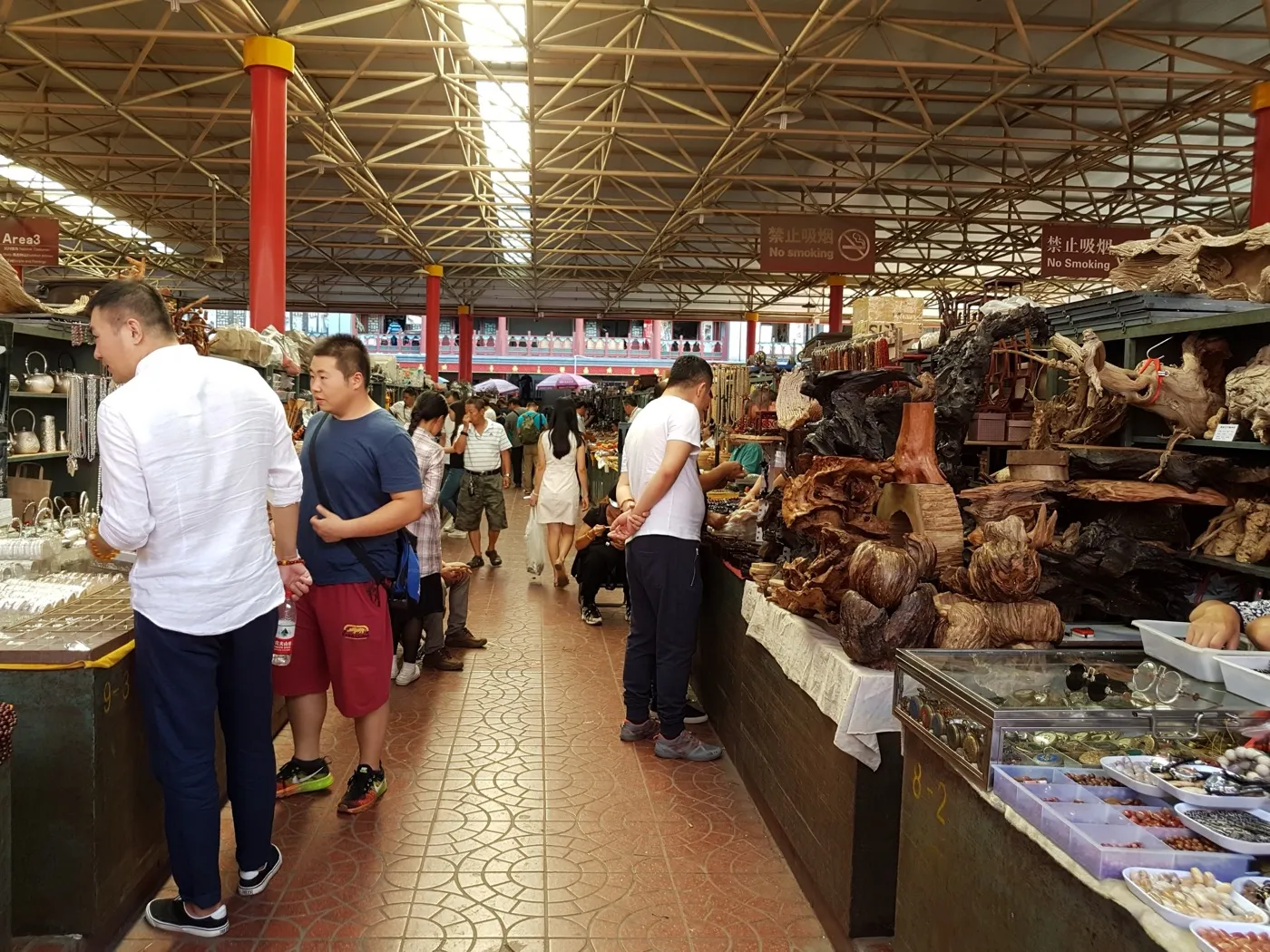 Most “antiques” at markets like Beijing’s Panjiayuan are reproductions — which is exactly why they’re easy to take home.
The reassuring part: the vast majority of “ancient” pieces you’ll see at flea markets like Beijing’s Panjiayuan (潘家园) are reproductions, not real relics. As replicas they’re cheap, charming, and perfectly legal to export. Problems only start when something is genuinely old.
How to stay safe:
- Treat market “antiques” as fun replicas, not investments — and don’t pay antique prices for them.
- If you want a real antique, buy from a licensed dealer or auction house that arranges the official appraisal, the red export seal, and the paperwork. Keep that certificate with the item for the airport.
- Hold on to your receipt for anything that looks old or valuable, even reproductions — it helps if customs ask questions.
Ethnic-minority costumes, silver & ritual objects
This is the one that surprises people. Old traditional costumes, embroidery, and silver jewellery from groups like the Miao, Yi, or Tibetan communities can qualify as cultural relics in their own right — and antique religious items (Tibetan thangkas, Buddhist statues, ritual objects, old scriptures) are especially sensitive and often can’t be exported.
This isn’t hypothetical. Customs officers at Guiyang’s Longdongbao Airport recently pulled a foreign traveller out of the outbound line after a scanner flagged their suitcase — inside were 56 pieces of ethnic clothing and 6 silver ornaments, and eight items were confirmed as protected cultural relics and held. Guizhou is Miao and Dong embroidery country: exactly the kind of place where a “great market haul” of old textiles and silver can quietly cross the line into relic territory.
A brand-new costume, a freshly made embroidered bag, or a modern souvenir thangka is fine. An old, hand-worked piece sold as “genuine antique” is exactly the kind of thing that needs a relic seal — or that you simply won’t be allowed to take out.
Rule of thumb: if a textile, costume, or religious object is being sold to you because it’s old, ask whether it comes with export documentation. If it doesn’t, buy the new version instead.
Wildlife products & animal-based medicine
These are banned both leaving China and entering your home country under CITES, so the penalties can be serious on both ends:
- Ivory (the global trade is banned — most countries won’t let it in), rhino horn, tiger products, pangolin scales.
- Sea turtle shell (“tortoiseshell”), certain corals, and some shells.
- Traditional Chinese medicine containing animal parts — many tonics and remedies include ingredients from protected species, even if it’s not obvious from the box.
When in doubt, skip animal-derived products entirely. A tin of tea or a jar of herbal plant tea is a far safer gift.
Other things customs care about
- Cash limits. You can carry up to ¥20,000 in RMB and the equivalent of about US$5,000 in foreign currency without declaring it. Above that, declare it. (Easiest fix: spend down your yuan before you fly — see our departure tips.)
- Maps & printed material. Maps that misrepresent China’s borders, and politically sensitive books or materials, can be held at customs.
- Fresh food, plants & seeds. Even if China lets them out, your own country’s import rules usually won’t let them in. Sealed, shelf-stable snacks and spices are the safe choice — fresh fruit, meat, and seeds are not.
The simple version
For 95% of travellers there’s nothing to worry about — buy your tea, silk, ceramics and snacks and enjoy them. Just pause before you buy three things:
- Anything sold as a genuine antique (pre-1949) → needs an official red export seal, or leave it.
- Old minority costumes, silver, or religious objects → same rule; buy the new version if it doesn’t.
- Wildlife products or animal-based medicine → just don’t.
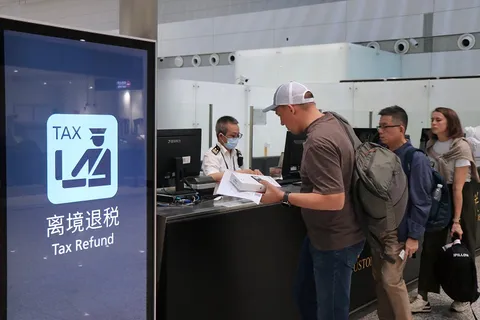
Get those right and your last stop — the airport — stays stress-free, with a VAT refund on the big purchases that are allowed to come home with you.