Using a public toilet abroad is one of those small things nobody tells you about — and in China it works a little differently from what most Western visitors expect. None of it is difficult once you know the drill. Here’s exactly what to expect and how to be ready.
The two types of toilet
- Squat toilets — a porcelain pan set into the floor that you squat over. These are the norm in older public restrooms, train stations, parks, smaller restaurants and rural areas. Face the hooded/raised end, feet on the ridged footplates, and squat low.
- Western (seated) toilets — standard in hotels, shopping malls, airports, high-speed trains, cafés and newer buildings. In a row of stalls, the Western one is often the end stall and may be marked with a sticker.
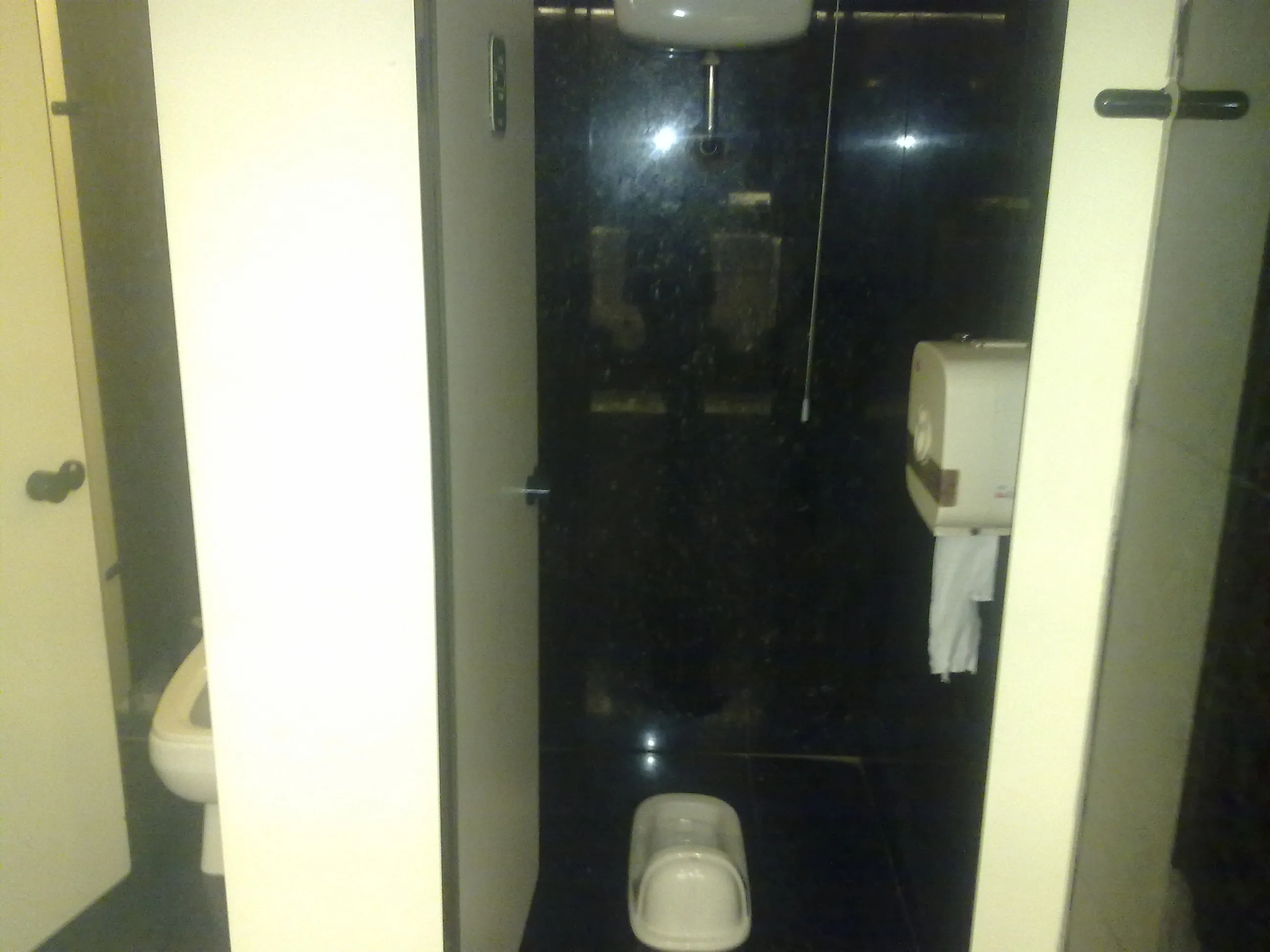 A typical squat toilet. Photo: Donald Trung (Wikimedia Commons), CC BY-SA 4.0.
Squat toilets feel strange the first time but are actually more hygienic in a public setting — nothing touches your skin. Give it one honest try; most people stop minding quickly.
How to use a squat toilet
It’s simpler than it looks. Step by step:
- Sort out paper first. Pull off the tissue you’ll need before you start — there’s rarely a holder within reach.
- Face the right way. Stand over the pan facing the hooded or raised end (the splash guard). Your back is to the door.
- Position your feet on the two ridged footplates on either side of the pan, roughly shoulder-width apart.
- Lower your trousers to your knees — not your ankles — and squat down low, keeping your weight over your heels. The deeper you squat, the better your aim and balance.
- Empty pockets first if your phone, keys or coins are loose — things fall out of back pockets surprisingly easily.
- Wipe, then put paper in the bin beside you if there is one; otherwise it’s fine to drop it in the pan.
- Flush — press the button or handle, or pour the bucket of water if it’s a manual setup. Some are motion-sensor.
A few comfort tips: holding onto the door handle or a wall rail helps your balance, leaning slightly forward keeps trousers clear, and steady your stance before you commit. Loose trousers or a skirt are far easier than skinny jeans.
If you’d like to see it in action, this short video walks through how toilets work in China:
The golden rule: bring your own tissues
This is the single most important tip on this page.
- Most public toilets do not provide toilet paper. Carry a pack of pocket tissues at all times. You can buy them at any convenience store, supermarket or street kiosk for a few yuan.
- Carry hand sanitiser too — soap is often missing, and some sinks only have cold water.
- A few modern malls and airports have paper at a shared dispenser near the entrance to the restroom (not inside the stall) — grab some before you go in.
Don’t flush the paper
In many older buildings and public restrooms, the plumbing can’t handle paper.
- If there’s a small bin beside the toilet, used paper goes in the bin, not down the bowl.
- Modern hotels, malls and trains are fine to flush — when in doubt, follow the bin cue: a bin with a lid means “put paper here.”
Finding a clean toilet
You’re rarely far from a decent one if you know where to look:
- Shopping malls, hotels, and big chain coffee shops (Starbucks, Luckin) and fast-food outlets (KFC, McDonald’s) have the cleanest, most reliable Western toilets — and you usually don’t need to be a customer.
- Metro stations, high-speed rail stations and airports all have facilities; station toilets vary, mall toilets are best.
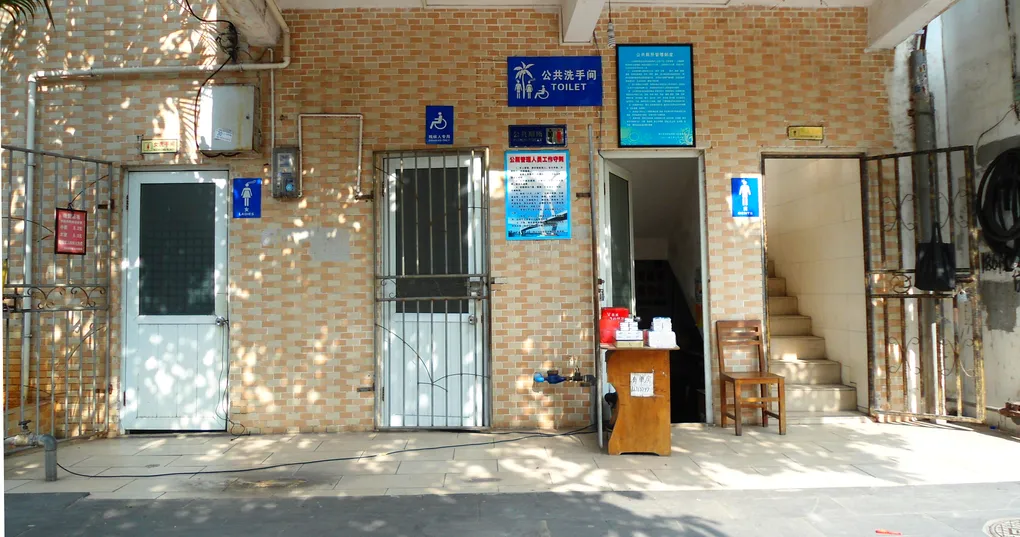
- Maps apps help — search “toilet” / “restroom” in Amap or Apple Maps, and many Chinese cities have well-signposted public “公共厕所” (public toilet) facilities, often free.
A few useful words
You won’t need much, but these help:
- Toilet / restroom — 厕所 (cèsuǒ) or 洗手间 (xǐshǒujiān)
- Where is the toilet? — 厕所在哪里?(Cèsuǒ zài nǎlǐ?)
- Men — 男 · Women — 女 (handy when only the characters are on the door)
A translation app covers anything else, but pointing at the characters above works in a pinch.
Quick tips
- Carry tissues and hand sanitiser every single day — pack a small bottle and refill a pocket pack.
- Go before you leave the hotel, mall or restaurant rather than gambling on what’s ahead.
- Bring a coin or small note for the occasional rural toilet that charges a yuan or two — rare in cities, but it happens.
- Travelling with kids? Toddlers often wear split-pants and you’ll see assisted “go” in public; for your own child, malls and family rooms have changing facilities. More in our travelling with a baby guide.
- Accessibility: large stations, airports and malls have accessible (wheelchair) stalls, which are also the easiest Western-style option.
- Stay healthy: wash or sanitise hands before eating street food — see staying healthy in China.
Sort out tissues and sanitiser on day one and the rest is a non-issue. It’s a small adjustment that takes about a day to stop noticing — and one less thing to worry about as you explore. For the other everyday surprises, read our culture shock guide.