When you don’t have time to research a local gem — or you just want a clean, reliable meal with a picture menu — China’s big restaurant chains are a traveller’s best friend. They’re everywhere (especially on the restaurant floors of shopping malls), they’re consistent, most have photo menus and tablet or QR-code ordering, and the brand itself is a quality filter.
Yes, the familiar Western names are here too — KFC, McDonald’s and Pizza Hut are all over China (and cleverly localised, with congee, egg tarts and rice bowls on the KFC menu). They’re a safe fallback. But you didn’t fly all this way for a Big Mac: the real reason to lean on chains is that China’s home-grown chains are excellent, cheap, and the easiest possible introduction to how the country actually eats. So skip the golden arches and try one of these instead.
Here’s a map of the Chinese chains you’ll actually see, sorted by type, with what each is known for and a rough price per person.
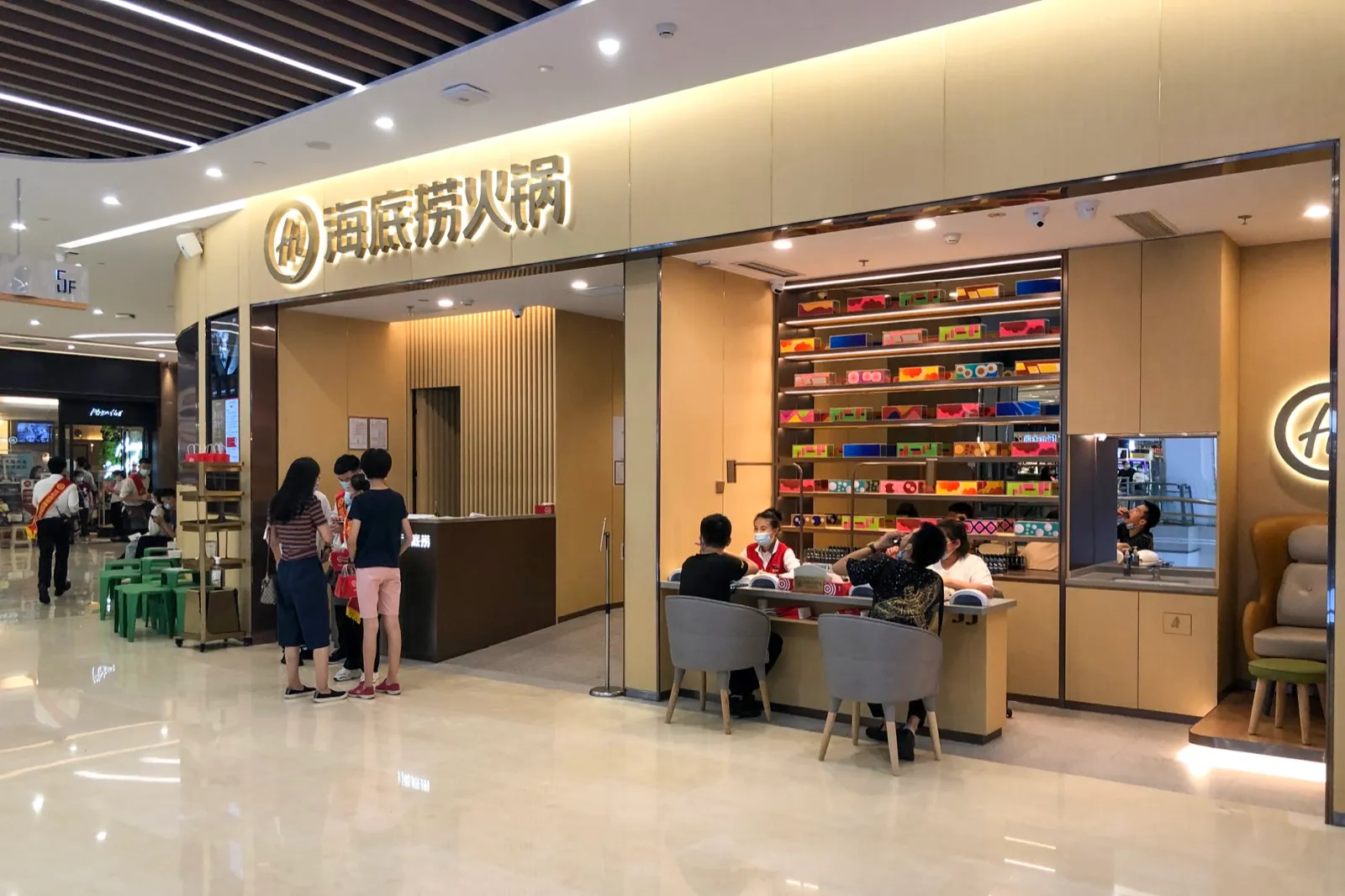 A Haidilao branch on a mall restaurant floor — chains like this are clean, reliable and used to foreign diners.
Hotpot (火锅, huǒ guō)
The social, cook-it-yourself meal: a simmering pot in the table, and you drop in meat, veg, tofu and noodles to cook. You pick your broth (mild mushroom or tomato, fiery Sichuan málà, or a split pot of both) and build a dipping sauce at the sauce bar. And don’t assume it’s all about chilli — the Chaoshan beef style below is gentle and completely non-spicy.
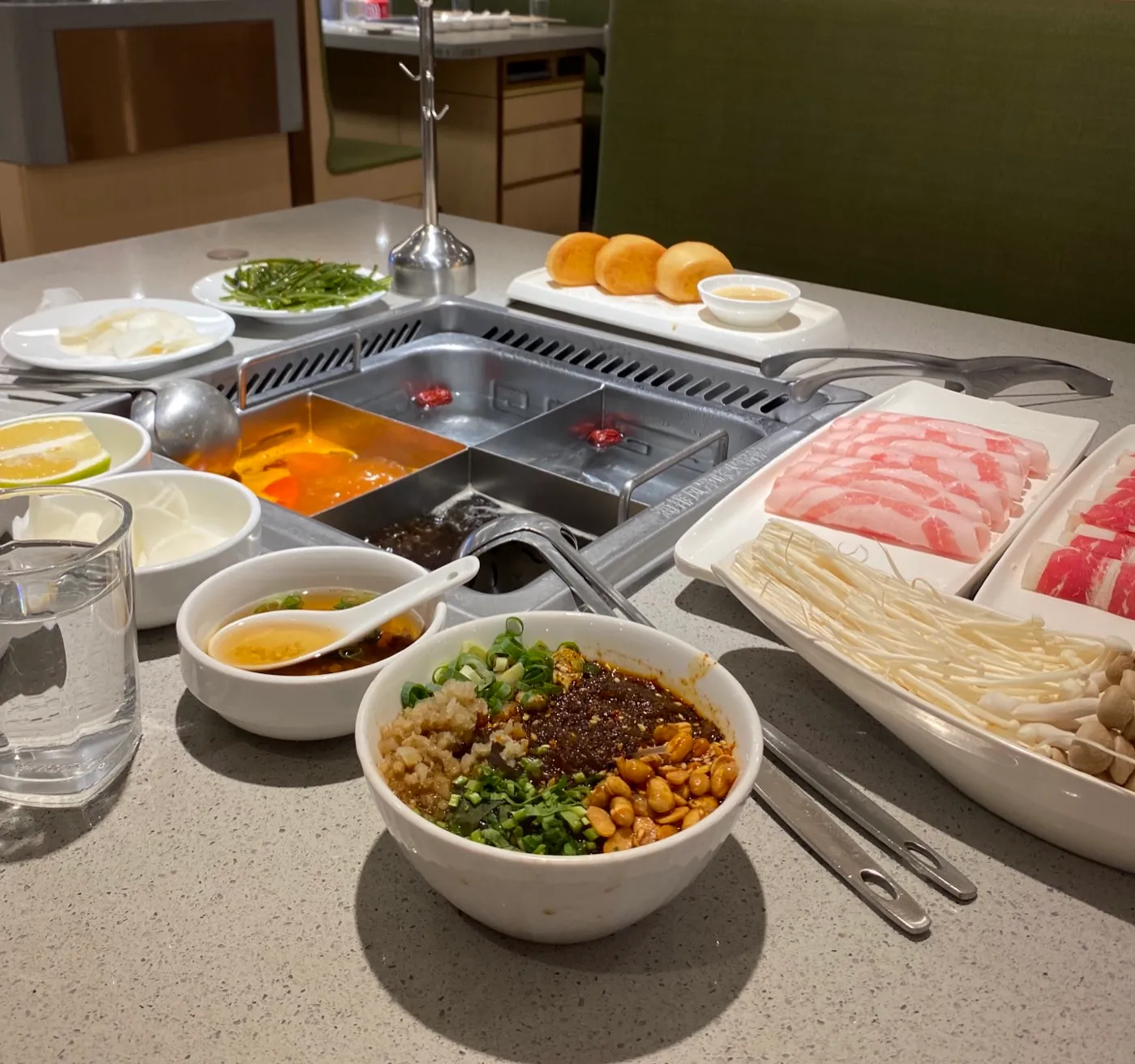 A split “yuanyang” pot — mild on one side, Sichuan málà on the other — with a self-made dipping sauce.
- Haidilao (海底捞, hǎi dǐ lāo) — ~¥130–160pp. The famous one, and the most foreigner-friendly: English menus, order by tablet, and legendary service — free snacks and even manicures while you wait, hot towels, and a noodle-pulling “dance” at your table. Spice is fully customisable. The easiest first hotpot in China.
- Banu (巴奴毛肚火锅, bā nú) — ~¥150–200pp. The quality-obsessed challenger; its signature is maodu (毛肚, tripe) and premium fresh ingredients. Pricier, very popular.
- Xiaolongkan (小龙坎, xiǎo lóng kǎn) — ~¥100–130pp. Authentic, properly spicy Chengdu/Chongqing-style hotpot if you want the real málà experience.
- Chaoshan beef hotpot — Bahe Li Hai Ji (八合里海记), Zuo Ting You Yuan (左庭右院) — ~¥100–130pp. The non-spicy alternative, and a revelation if you can’t handle chilli: a clear, light beef-bone broth with platters of freshly hand-cut beef sorted by cut (鲜切牛肉), each swished in for a few seconds and dipped in nutty shacha sauce (沙茶酱). Clean, beefy and gentle — the easiest hotpot for spice-averse eaters.
- Lao Wang (捞王锅物料理, lāo wáng) — ~¥150–180pp. Another excellent non-spicy pick, in a different style: a milky, peppery pork-tripe-and-chicken broth (胡椒猪肚鸡, hú jiāo zhū dù jī) slow-simmered for hours. Warming and soothing rather than fiery — a comforting choice in cooler weather.
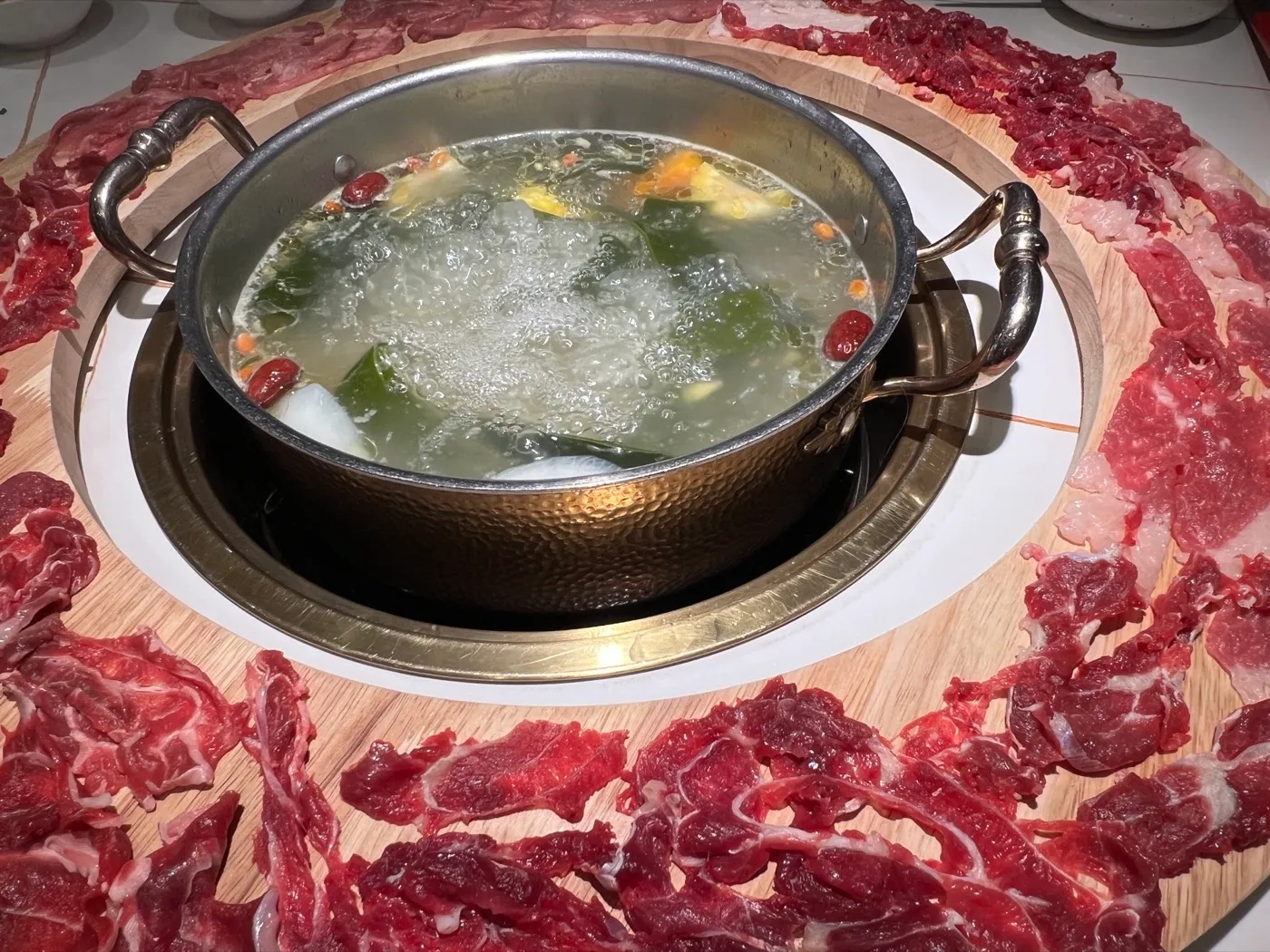 Chaoshan beef hotpot: a clear, non-spicy broth and freshly hand-cut beef — ideal if chilli isn’t for you.
Regional sit-down chains (order to share)
Full-service restaurants serving a regional cuisine, with dishes ordered to the centre of the table. Reliable, sit-down, mid-priced — the heart of everyday eating out.
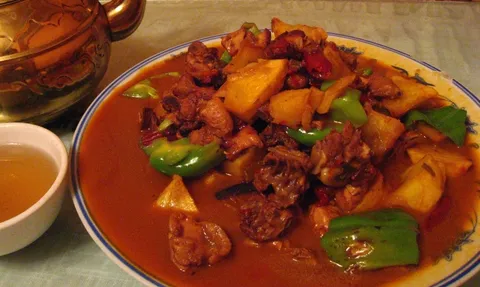
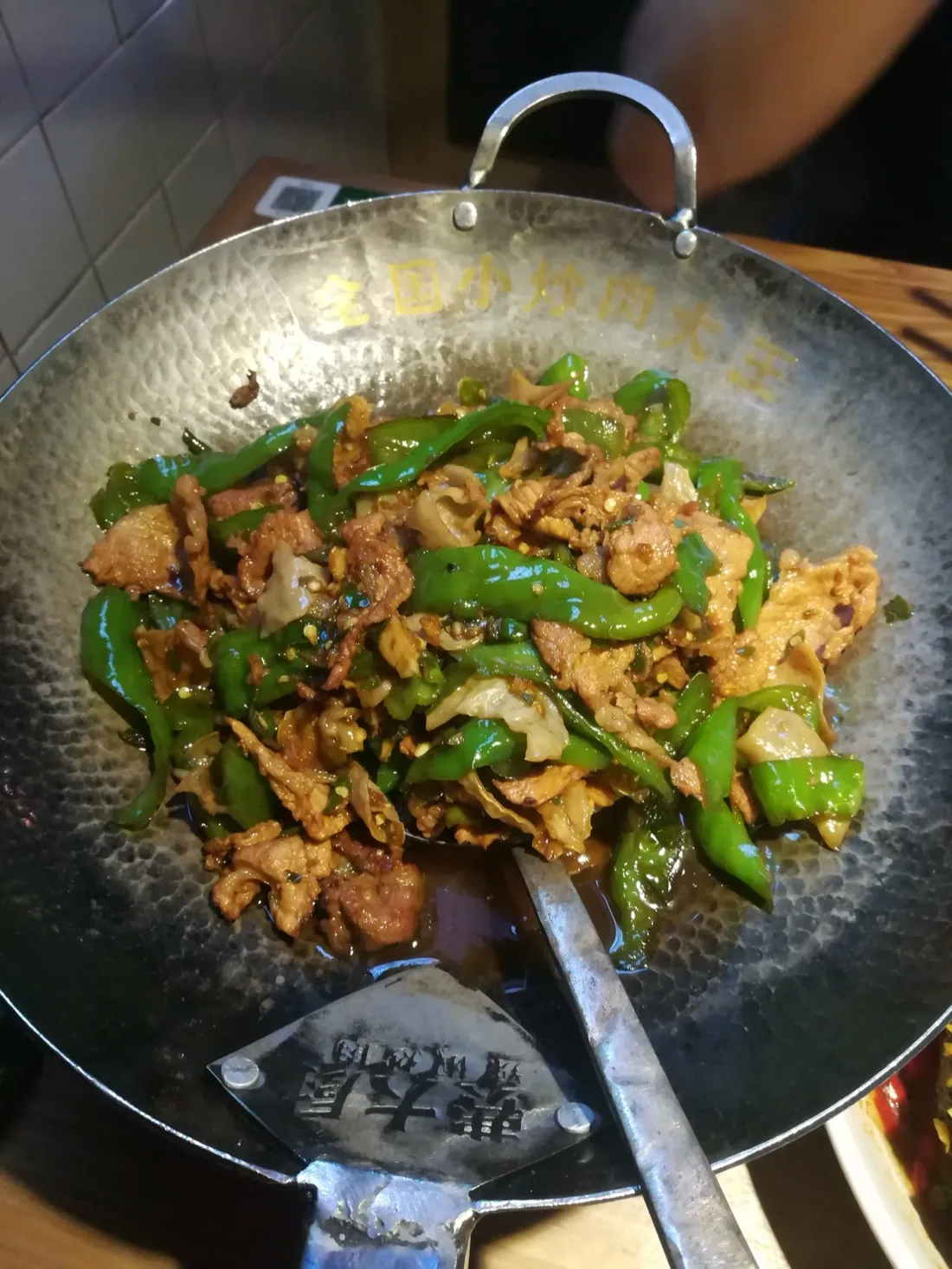 Chilli stir-fried pork (辣椒炒肉) — Feidachu built a national chain on this one Hunan dish.
- Feidachu (费大厨辣椒炒肉, fèi dà chú) — ~¥70–90pp. Hunan cuisine, built around one famous dish: chilli stir-fried pork (辣椒炒肉, là jiāo chǎo ròu). Genuinely spicy, deeply savoury, and a national hit — over 100 branches.
- Tai Er (太二酸菜鱼, tài èr) — ~¥70–90pp. A one-dish wonder: Sichuan sauerkraut fish (酸菜鱼, suān cài yú) — tender snakehead fish in a tangy, mildly numbing pickled-mustard broth. Quirky branding (famously “no parties over four people”).
- Xibei (西贝莜面村, xī běi) — ~¥80–110pp. Northwestern food (Inner Mongolia / Shanxi / Gansu): oat noodles (莜面, yóu miàn) and cumin-spiced lamb chops. Bright, spotless and very family-friendly.
- Green Tea (绿茶, lǜ chá) & Grandma’s Home (外婆家, wài pó jiā) — ~¥60–80pp. Hangzhou-style home cooking, generous and cheap — which means long queues. Tea-smoked ribs and bread-with-condensed-milk are crowd favourites.
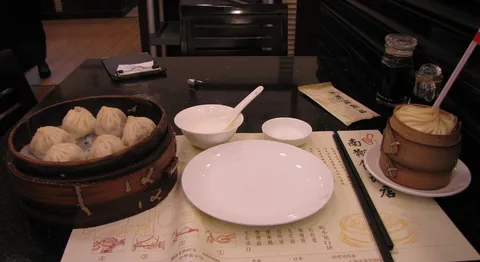
- Nanjing Impressions (南京大牌档, nán jīng dà pái dàng) — ~¥70–90pp. Jiangsu small plates in a lively old-teahouse setting; great fun and very photogenic.
Roast duck & classic banquet names
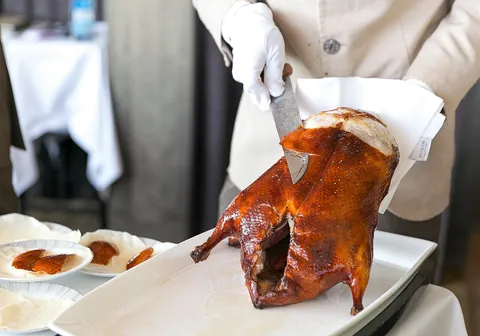
- Quanjude (全聚德, quán jù dé) — ~¥200pp+. The historic Peking duck institution (since 1864). Touristy and not cheap, but a recognisable name for the classic carved-duck-and-pancakes experience.
- Da Dong (大董, dà dǒng) — ~¥300–500pp. Upscale, modern roast duck — leaner “super-crispy” skin and beautiful plating, if you want to splurge. On a tighter budget, its fast-casual sibling Xiao Da Dong (小大董, xiǎo dà dǒng) serves the same style of duck and signature dishes for around ¥150pp — most of the quality, a fraction of the bill.
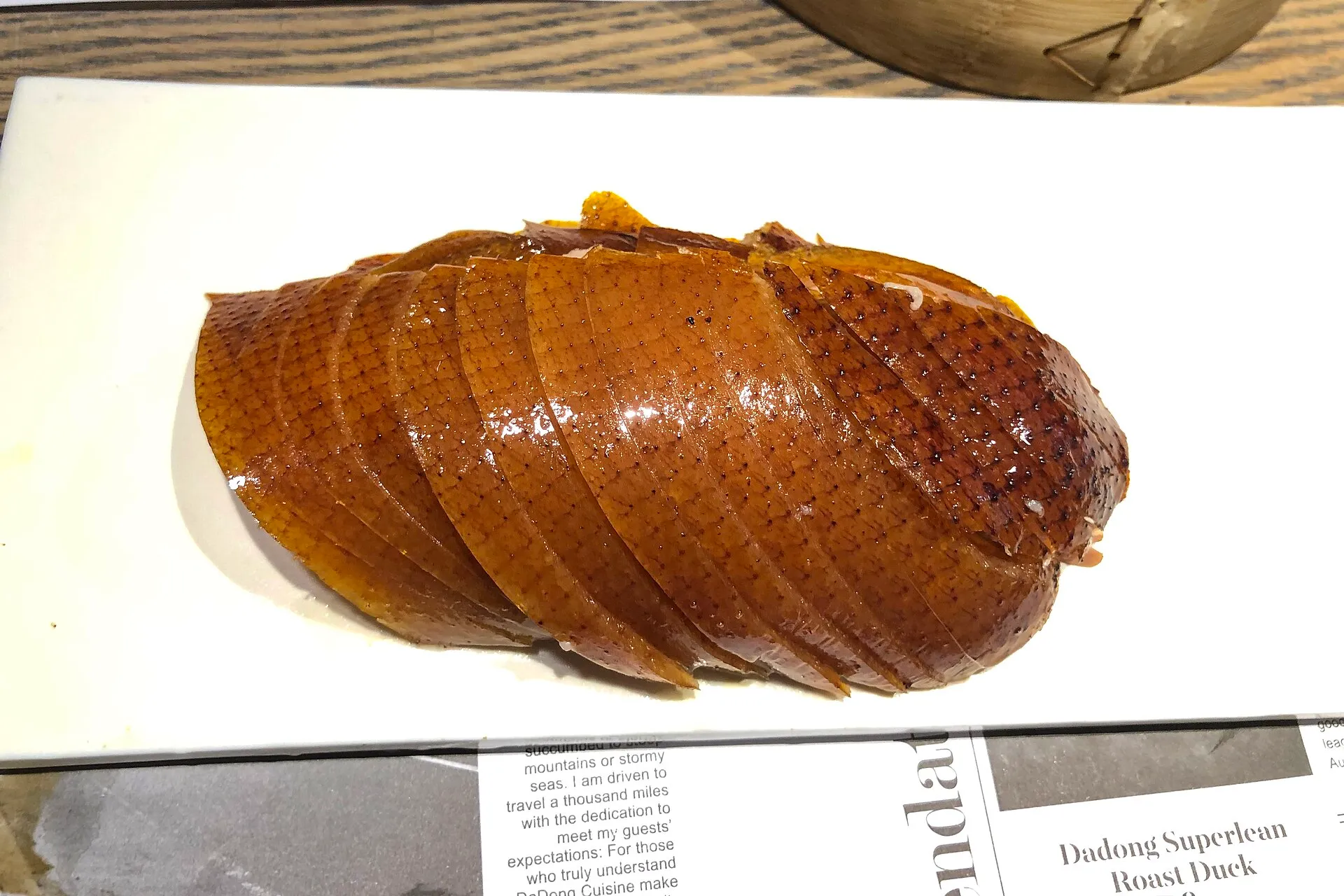 Carved Peking duck — crisp skin to wrap in thin pancakes with scallion and sweet bean sauce.
Chinese fast food (quick single meals)
Order at a counter or screen, eat in 20 minutes — usually a rice or noodle dish for one, no sharing needed.
- Zhen Gong Fu / Real Kungfu (真功夫, zhēn gōng fu) — ~¥30–40pp. The Bruce-Lee-logo chain built on steamed rice plates and soups — think steamed pork-rib rice and chicken. Marketed as the healthier fast-food option.
- Laoxiangji (老乡鸡, lǎo xiāng jī) — ~¥30–45pp. Wildly popular home-style comfort food from Anhui: its signature chicken soup, plus a rotating tray of fresh stir-fries you point at. Spotless and dependable.
- Country Style Cooking (乡村基, xiāng cūn jī) & Mr. Rice (大米先生) — ~¥25–35pp. Chongqing-born fast food: spicy rice bowls and point-and-pick stir-fries by the dish.
- Yonghe King (永和大王, yǒng hé dà wáng) — ~¥25–35pp. Taiwanese-style all-day breakfast: soy milk (豆浆), fried dough sticks (油条), congee and beef-noodle soup. Open early — handy after a red-eye.
Noodles, dumplings & cheap eats
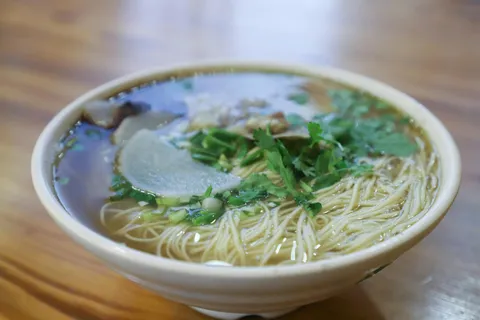
- Lanzhou beef noodle chains — Chen Xianggui (陈香贵), Ma Ji Yong (马记永), Zhang Lala (张拉拉) — ~¥30–40pp. The new wave of hand-pulled Lanzhou beef noodle soup (兰州牛肉面): clear broth, springy noodles pulled to order, chilli oil on top. A great cheap, single-bowl meal.
- Hefu Noodles (和府捞面, hé fǔ) — ~¥40–55pp. “Library”-themed noodle bar with refined braised-beef and tomato noodle bowls; a notch more upmarket.
- Shaxian Snacks (沙县小吃, shā xiàn xiǎo chī) — ~¥15–25pp. The humble, ubiquitous mom-and-pop franchise — wontons, peanut-sauce mixed noodles (拌面) and steamed dumplings for pocket change. Not fancy, but everywhere and cheap.
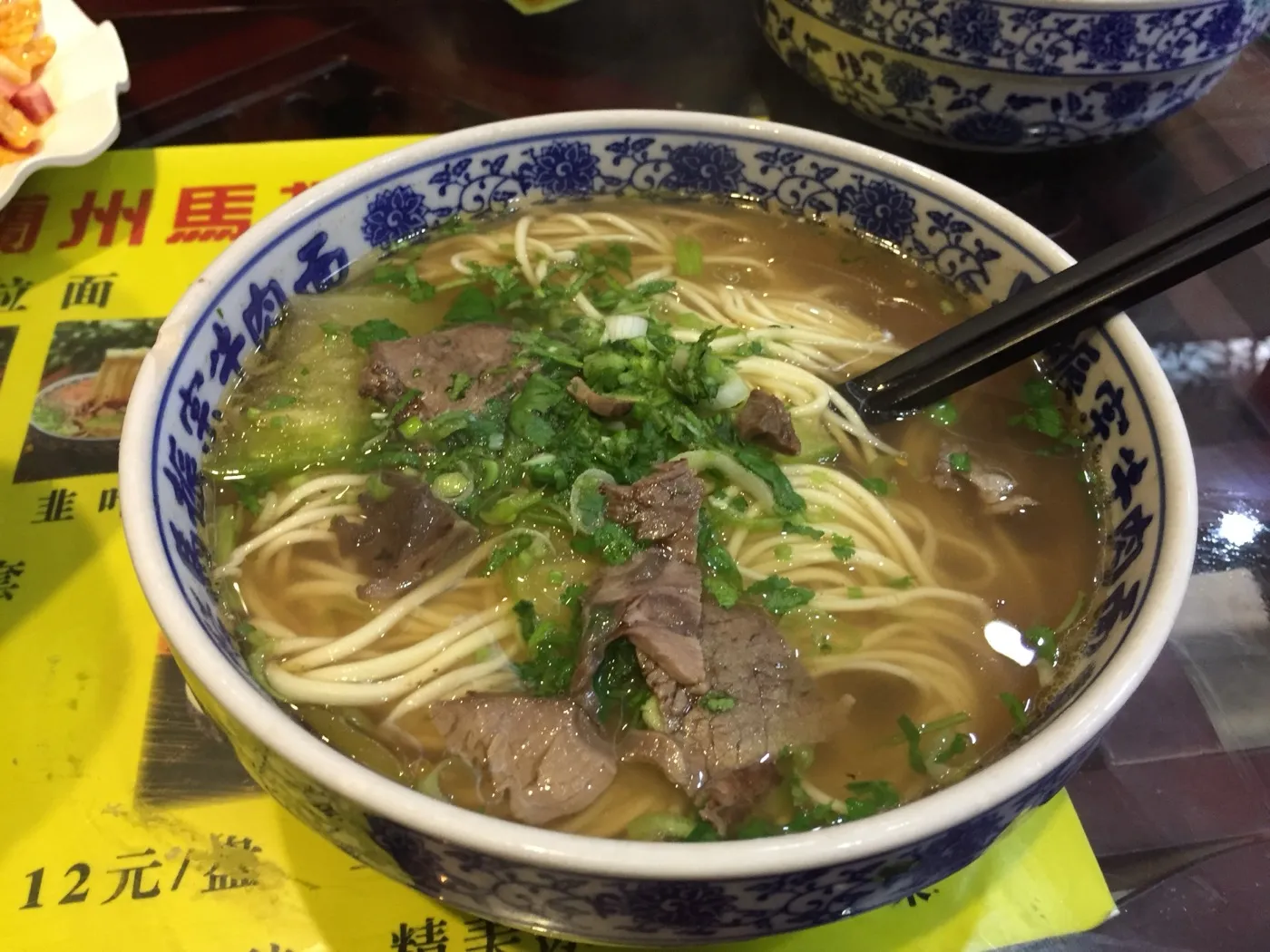 Lanzhou beef noodle soup (兰州牛肉面) — clear broth, noodles pulled to order, a splash of chilli oil.
How to order at a chain
- Many chains use QR-code self-ordering (扫码点餐): scan the code on the table, order and pay in the WeChat/Alipay mini-program. If that’s tricky without a Chinese number, just ask staff for a paper or tablet menu — they’re used to it. See ordering food without Chinese.
- Spice is adjustable. Ask for mild (不辣, bù là) or medium (微辣, wēi là) — “spicy” at a Hunan or Sichuan chain can be intense.
- Check ratings on Dianping (China’s Yelp) to find the nearest branch and its must-order dishes.
- The most popular chains get long queues at peak times — take a number, or eat slightly early/late. A few flagship branches need a booking (and a Chinese phone number); if you’re set on one, contact us and we can help arrange it.
Chains won’t replace the thrill of a back-alley noodle stall, but they take the risk out of a meal — and a first hotpot at Haidilao or a plate of Feidachu’s chilli pork is a genuinely great introduction to how China actually eats.