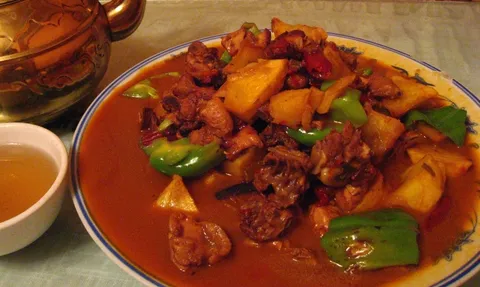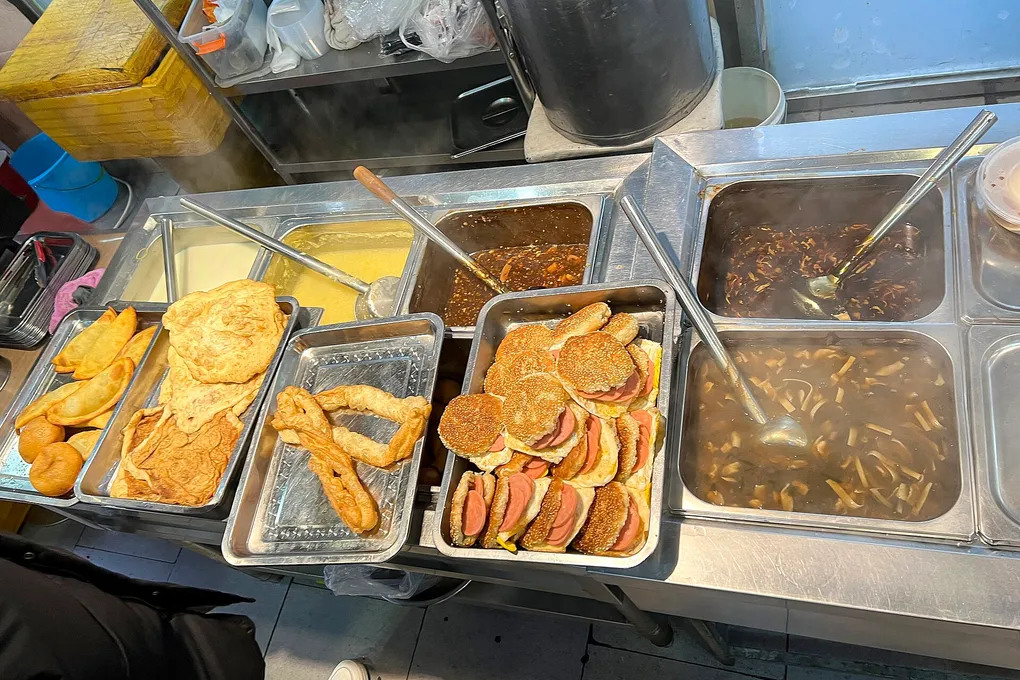
Forget the dinner-table stereotypes — to understand how China actually eats, get up early. Breakfast (zǎocān 早餐) is the most local, most regional and often the most delicious meal of the day, and almost nobody cooks it at home. People grab it on the way to work from carts, hole-in-the-wall shops and steaming morning markets. It’s cheap, savoury more often than sweet, and it changes completely as you travel across the country.
Here’s what to look for everywhere, and then the cities worth waking up early for.
The everyday classics
These show up across most of China — a safe, delicious starting point anywhere you land.
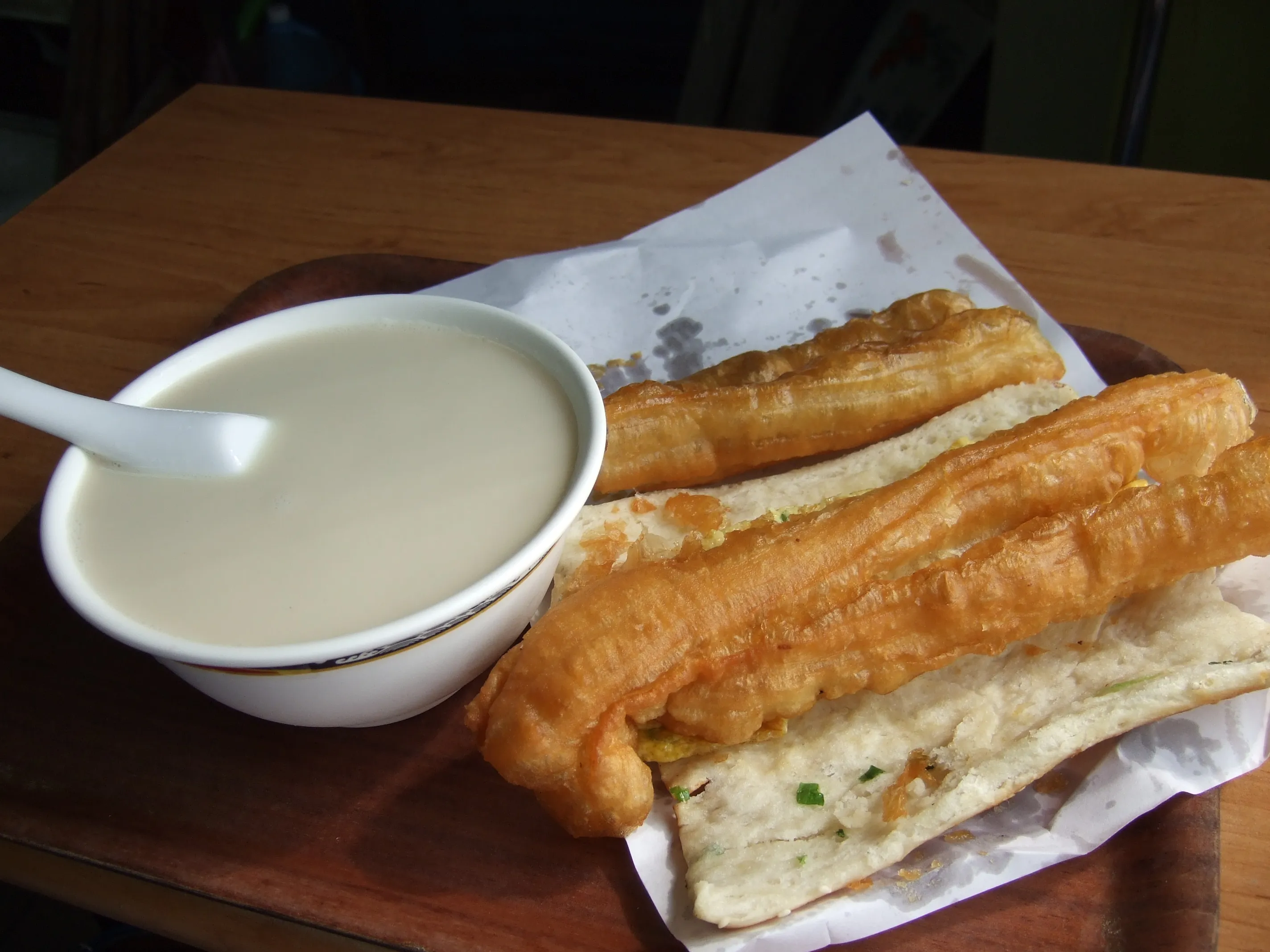 The classic pairing: youtiao (fried dough sticks) dunked into hot soy milk.
- Youtiao (油条) — long, airy sticks of fried dough, crisp outside and chewy inside. The national breakfast icon.
- Doujiang (豆浆) — fresh soy milk, hot, either sweet or savoury (curdled with vinegar and topped with dried shrimp, pickles and bits of youtiao). The savoury version surprises first-timers — give it a try.
- Baozi (包子) — soft steamed buns with pork, veg or red-bean fillings. Mantou (馒头) are the plain, unfilled version.
- Zhou / congee (粥) — silky rice porridge, eaten plain or loaded with century egg, pork floss, peanuts and pickles.
- Jianbing (煎饼) — a savoury griddle crepe wrapped around egg, a crispy cracker, herbs and sauces. The king of street breakfast (more in our street food guide).
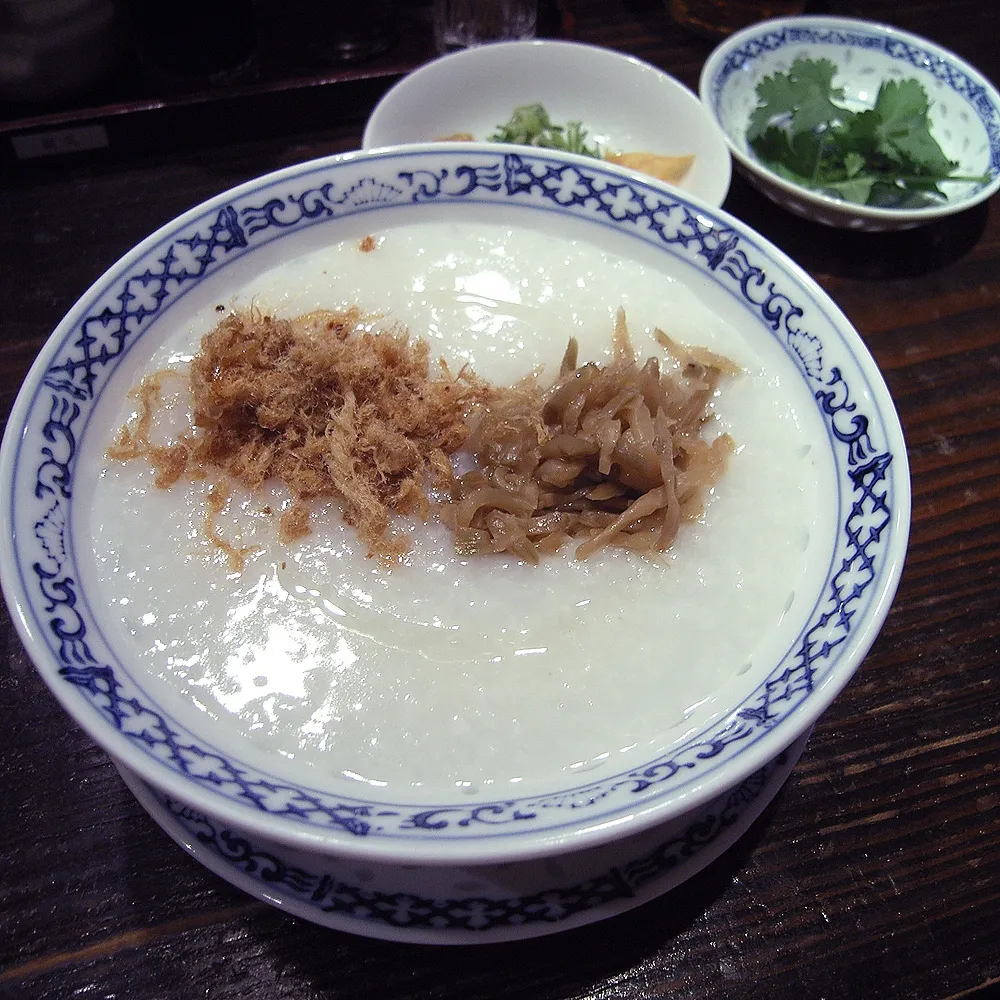 Congee with preserved vegetables and pork floss — the gentle, comforting end of the breakfast spectrum.
North vs south, in one bite
As a rule of thumb: the wheat-growing north does dough — youtiao, baozi, hand-pulled noodles and jianbing. The rice-growing south does congee, rice noodles and the whole leisurely world of morning tea (yum cha). Cross a provincial border and breakfast can look like a different country.
Cities famous for one breakfast
Some Chinese cities are practically defined by a single morning dish. If you’re there, this is what to eat — and where breakfast becomes a reason to visit.
Wuhan — reganmian (热干面)
Wuhan is China’s breakfast capital, with its own word for the morning ritual: guò zǎo (过早, “passing the morning”). The star is reganmian — “hot dry noodles” tossed with rich sesame paste, pickled radish and chilli oil, no soup. Locals eat it walking down the street. Don’t miss doupi (豆皮), a crispy tofu-skin parcel of sticky rice and pork.
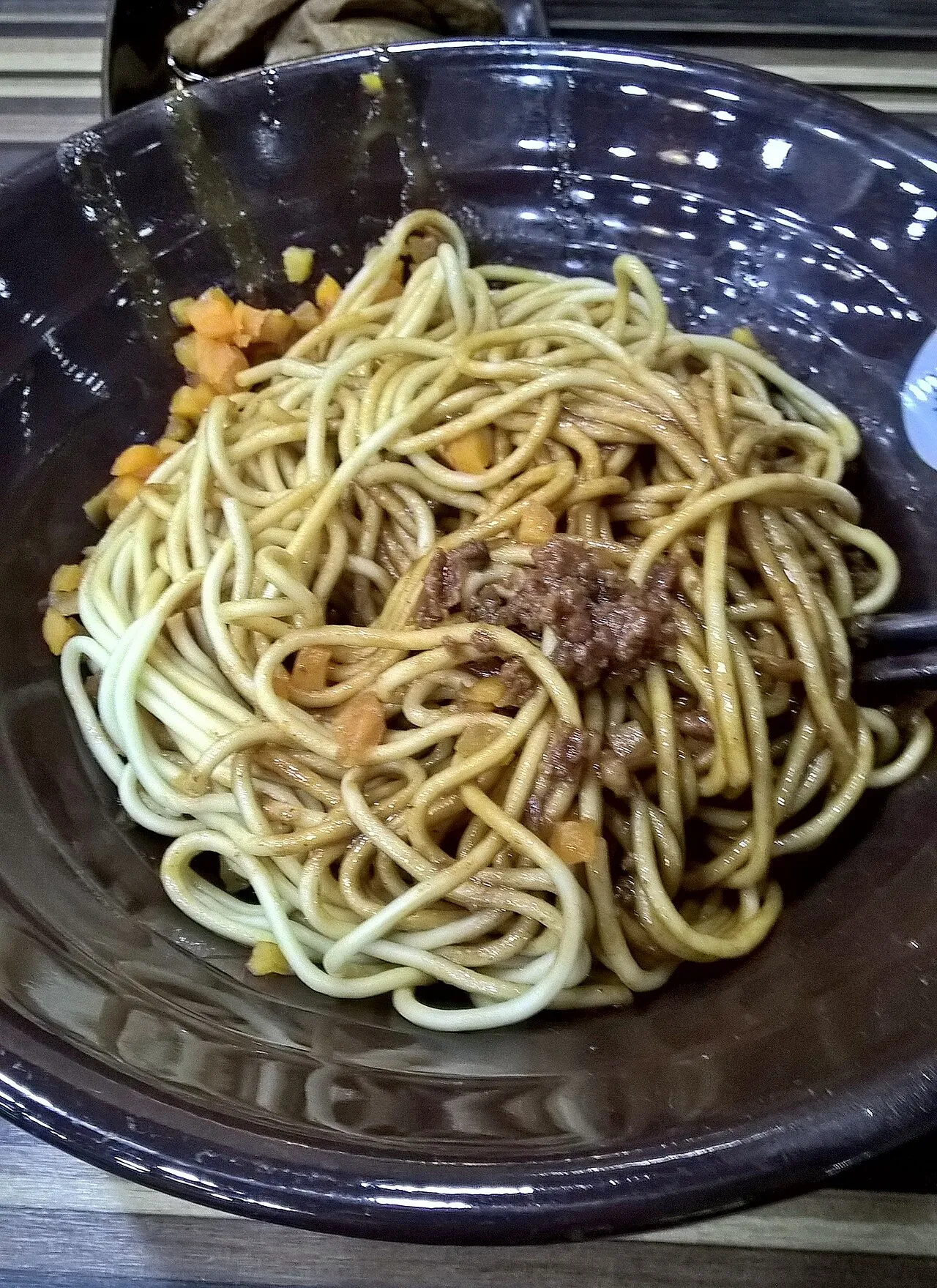 Wuhan’s reganmian: springy noodles coated in sesame paste, eaten fast and on your feet.
Guangzhou — morning tea & dim sum (早茶)
In Canton, breakfast is a slow social ritual called yum cha (“drinking tea”). You order endless small plates of dim sum: shrimp dumplings (har gow), pork siu mai, BBQ pork buns (char siu bao) and silky rice rolls (cheung fun), all washed down with tea. It can stretch for hours. (See our full Cantonese cuisine guide.)
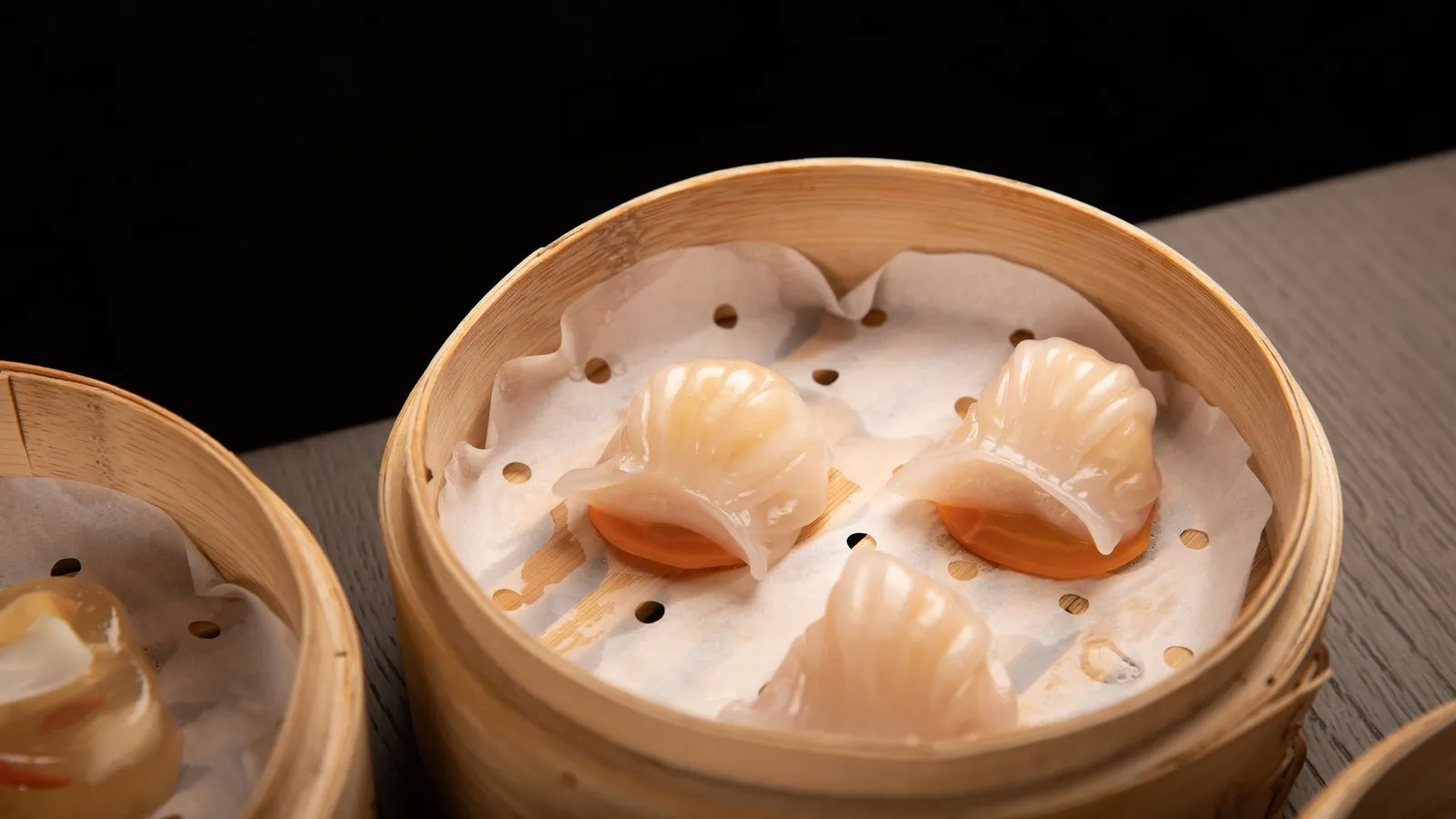 Har gow at a Guangzhou teahouse — the heart of a leisurely morning yum cha.
Xi’an — yangrou paomo (羊肉泡馍)
Xi’an does breakfast like nowhere else. Yangrou paomo is a hearty lamb soup where you tear a dense flatbread into tiny pieces by hand before it’s ladled with broth, glass noodles and meat. Pair the city with roujiamo (the “Chinese hamburger”) and spicy hú là tāng (胡辣汤) pepper soup which is originated from Henan Province.
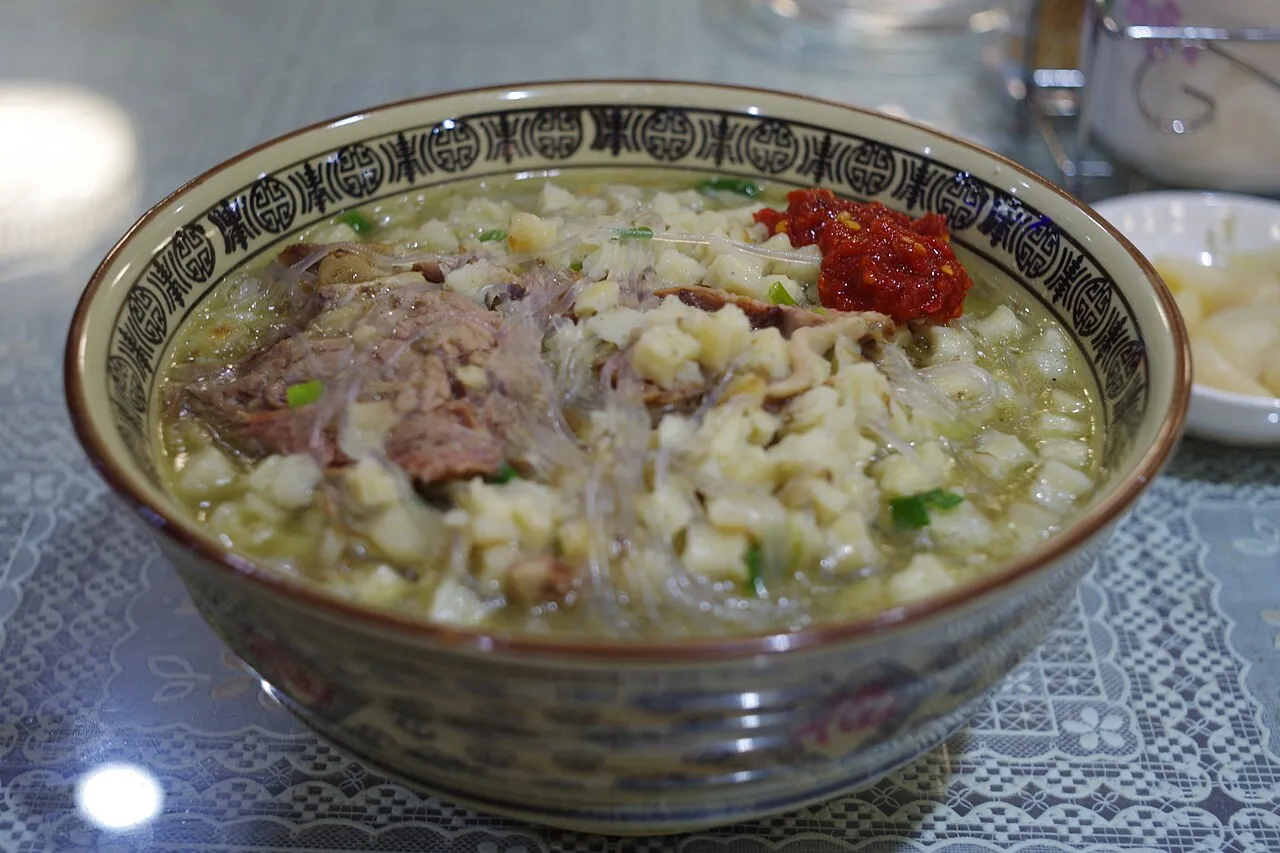 Xi’an’s yangrou paomo: tear the bread yourself, then it’s flooded with rich lamb broth.
Lanzhou — beef noodle soup (兰州牛肉面)
Gansu’s capital gave China its most famous noodle, and locals eat it first thing in the morning. A true Lanzhou lamian is hand-pulled to order in a clear, long-simmered beef broth, finished with white radish, chilli oil and coriander. Look for the “一清二白三红四绿” balance — clear broth, white radish, red chilli, green herbs.
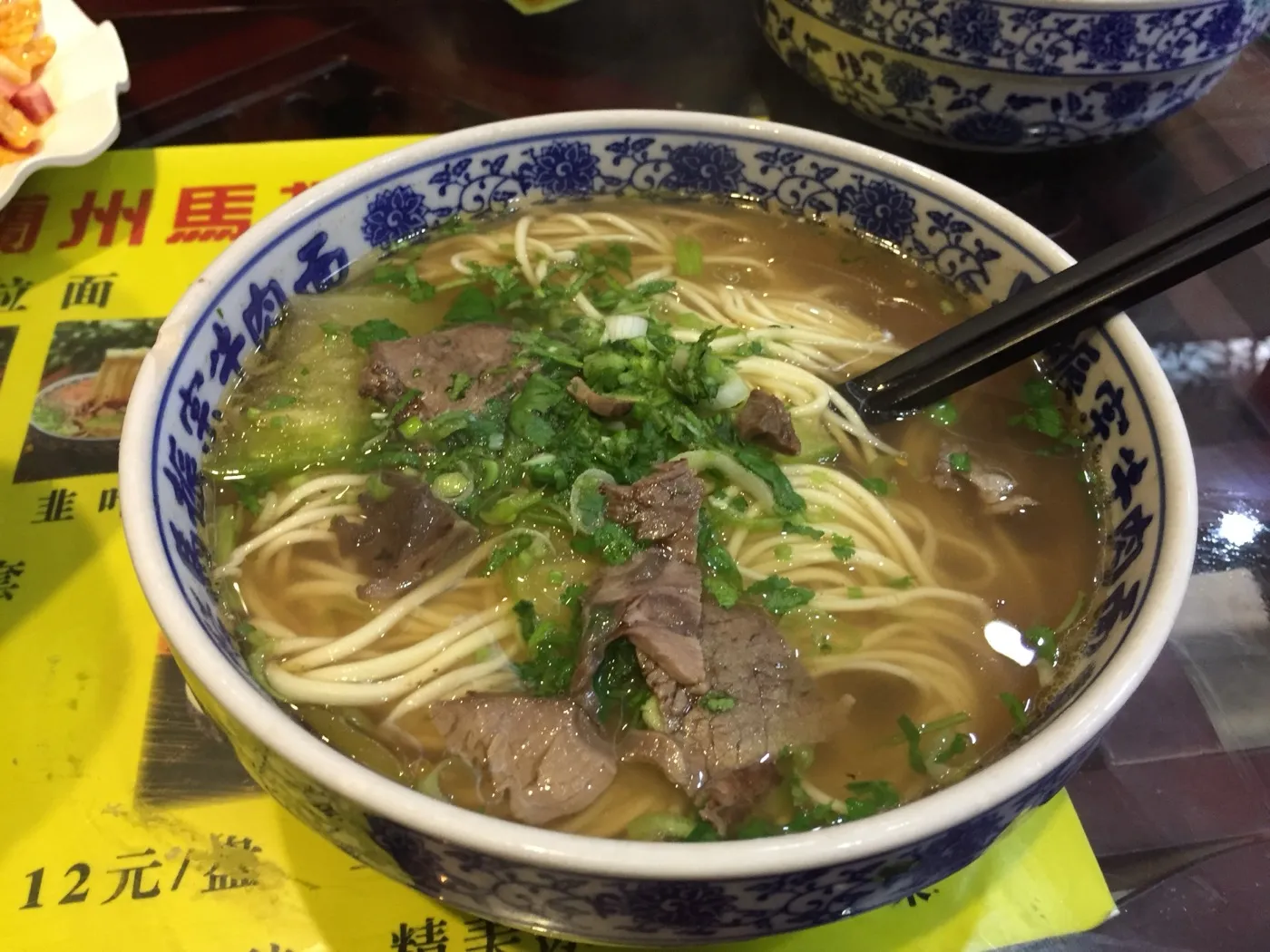 Lanzhou beef noodles — hand-pulled to order in a clear, aromatic broth.
Shanghai & Jiangnan — shengjian & the “Four Warriors”
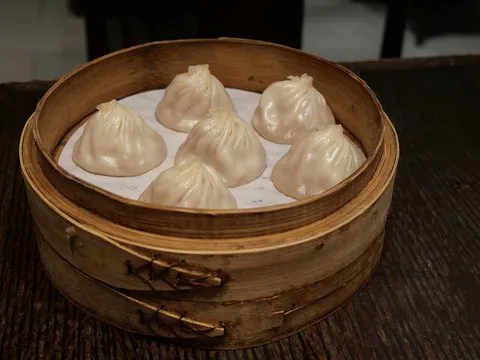
Shanghai mornings mean the “Four Warriors” (四大金刚): youtiao, a flaky sesame flatbread (dabing), soy milk and a sticky-rice roll (cifan tuan). But the real prize is shengjian — pan-fried pork buns with crisp bottoms and a burst of hot soup inside. Xiaolongbao (soup dumplings) are a close cousin.
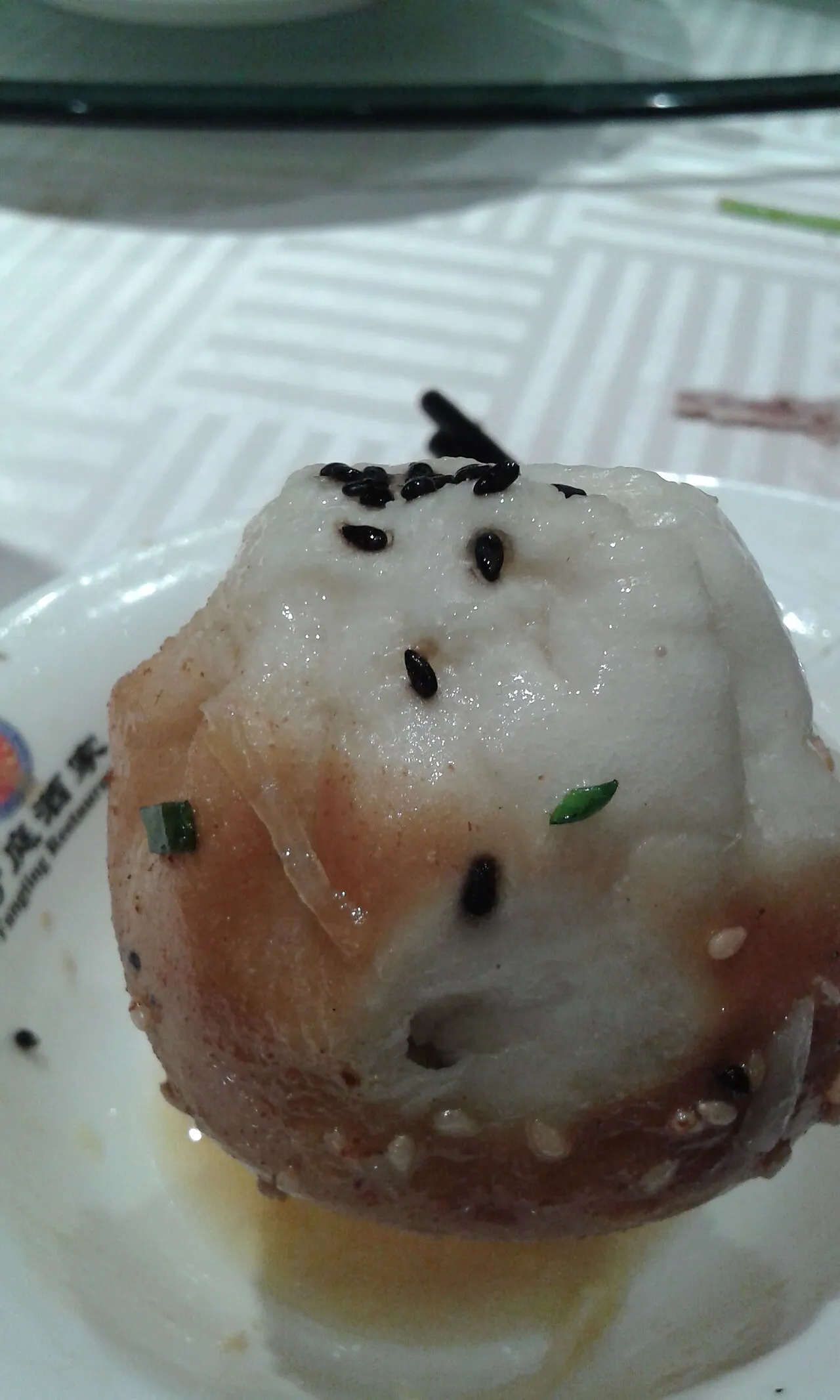 Shengjian: bite a small hole first, sip the soup, then eat — Shanghai’s great breakfast hazard.
Suzhou — refined noodle soup (苏式汤面)
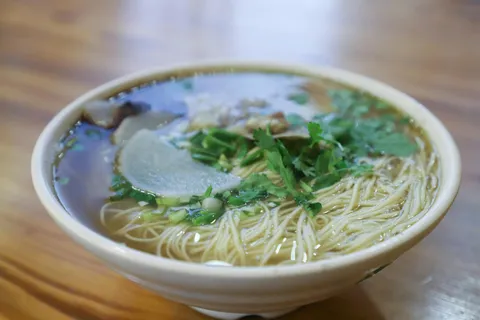
Genteel Suzhou treats breakfast as an art. Its Suzhou-style noodle soup is all about a crystal-clear, layered broth and the tóu tāng miàn (头汤面) — the prized “first soup” noodles cooked early before the water clouds — topped with smoked fish, braised pork or stewed duck.
Chongqing — xiaomian (小面)
The mountain city wakes up to xiaomian: a deceptively simple bowl of noodles built on a dozen seasonings — chilli oil, Sichuan pepper, garlic, pickles, peanuts. Cheap, fiery and beloved enough to have its own citywide rankings.
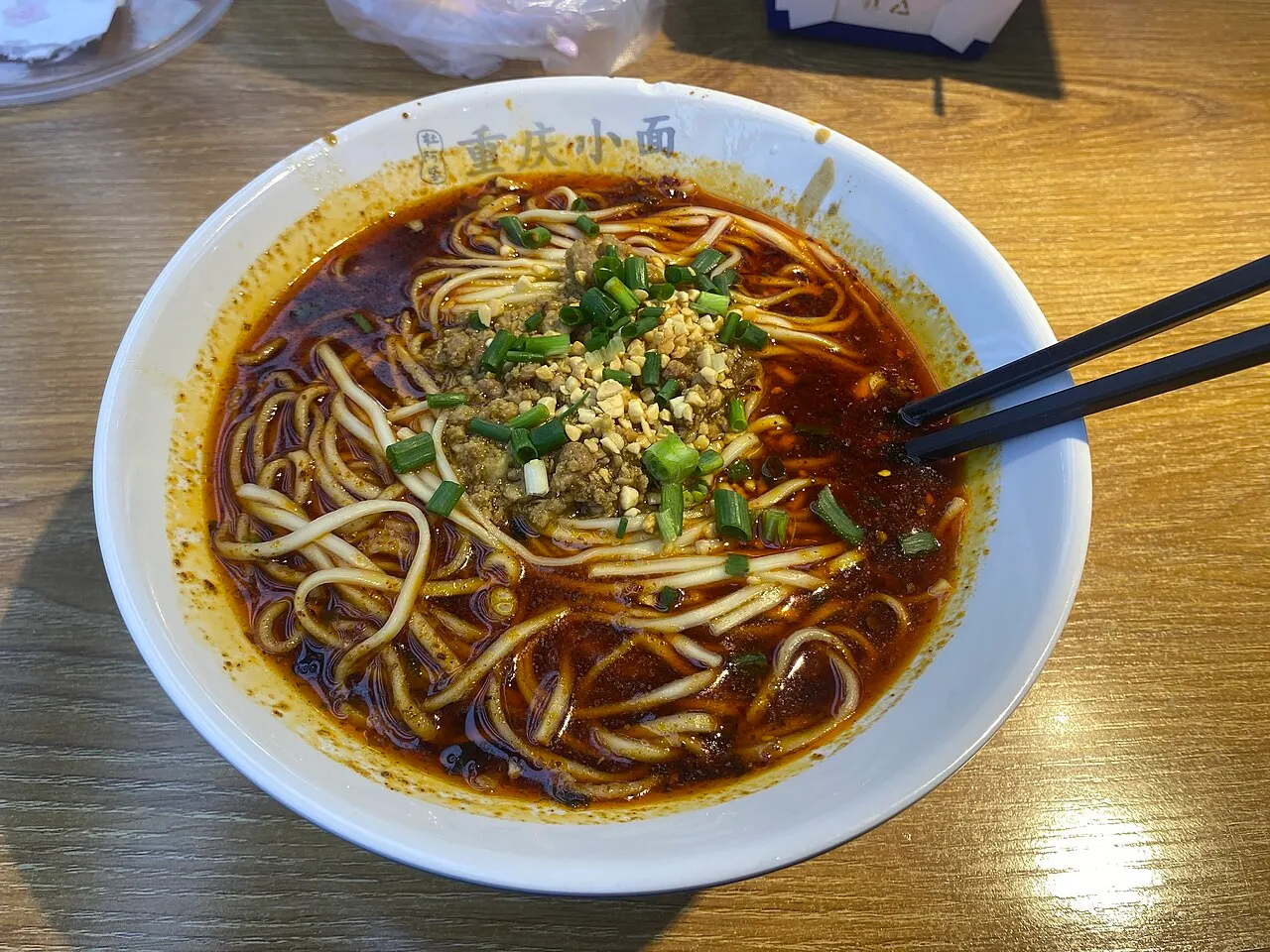 Chongqing xiaomian — plain-looking noodles hiding a dozen seasonings under the chilli oil.
Changsha — rice noodles (米粉)
In Hunan’s capital, the morning verb is sō fěn (“slurping noodles”). Flat rice noodles arrive in a savoury broth under a spoonful of stewed pork or beef (mǎ zi, the topping), spiked with chilli and pickled string beans.
Guilin & Liuzhou — rice noodles, two ways (米粉 / 螺蛳粉)
In Guangxi, Guilin rice noodles are tossed with savoury braising “lo sui” sauce, crisp fried soybeans and pickles, with broth added to taste. Nearby Liuzhou is the home of luosifen — the pungent, addictive snail-broth rice noodle that’s become a national obsession.
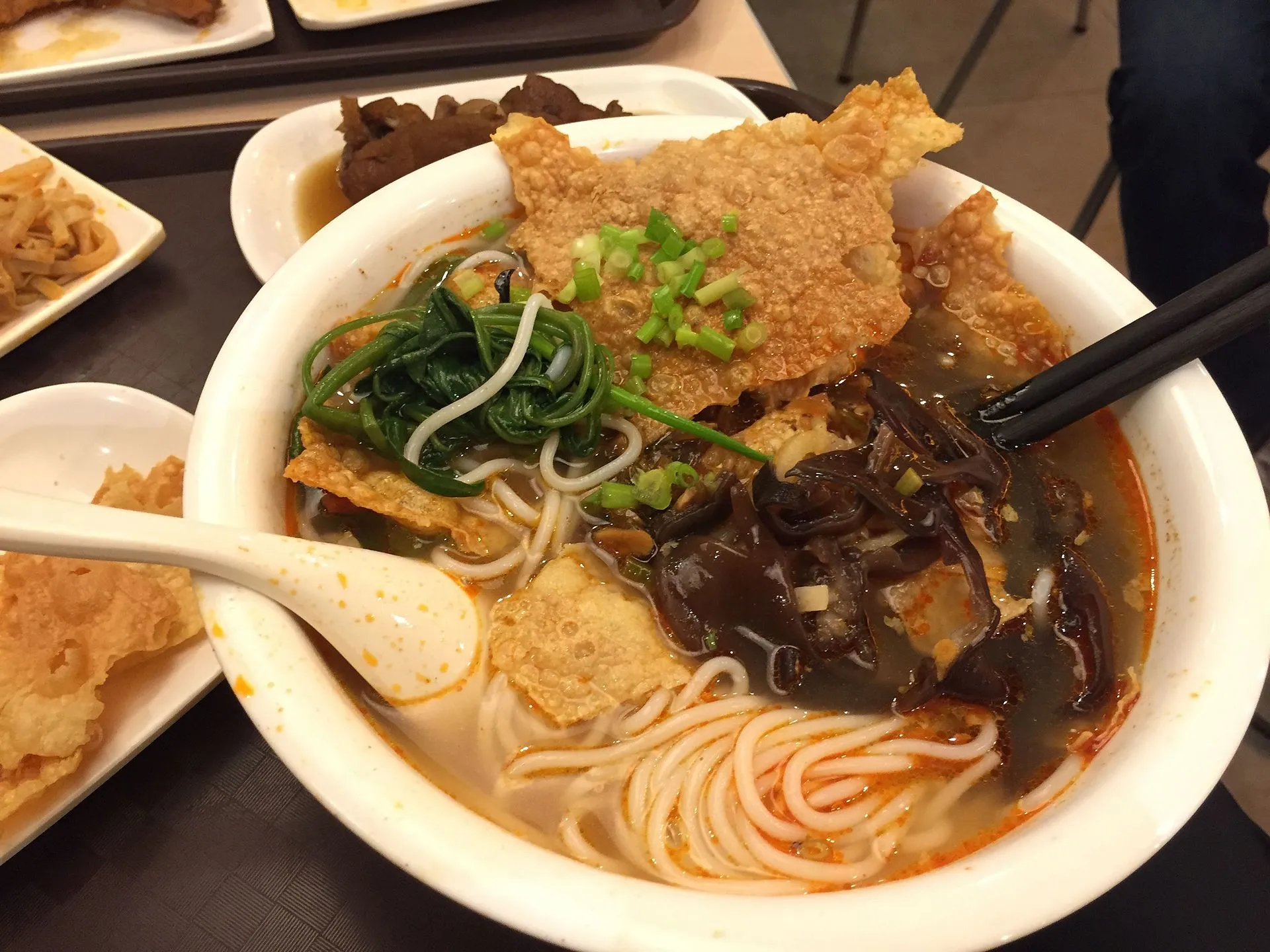 Liuzhou’s luosifen: it smells challenging, but the funky snail broth is wildly addictive.
Kunming — crossing-the-bridge rice noodles (过桥米线)
Yunnan’s signature guoqiao mixian is breakfast as theatre: a bowl of super-hot oil-sealed broth arrives with raw meats, vegetables and noodles on the side that you cook tableside, second by second, in the soup.
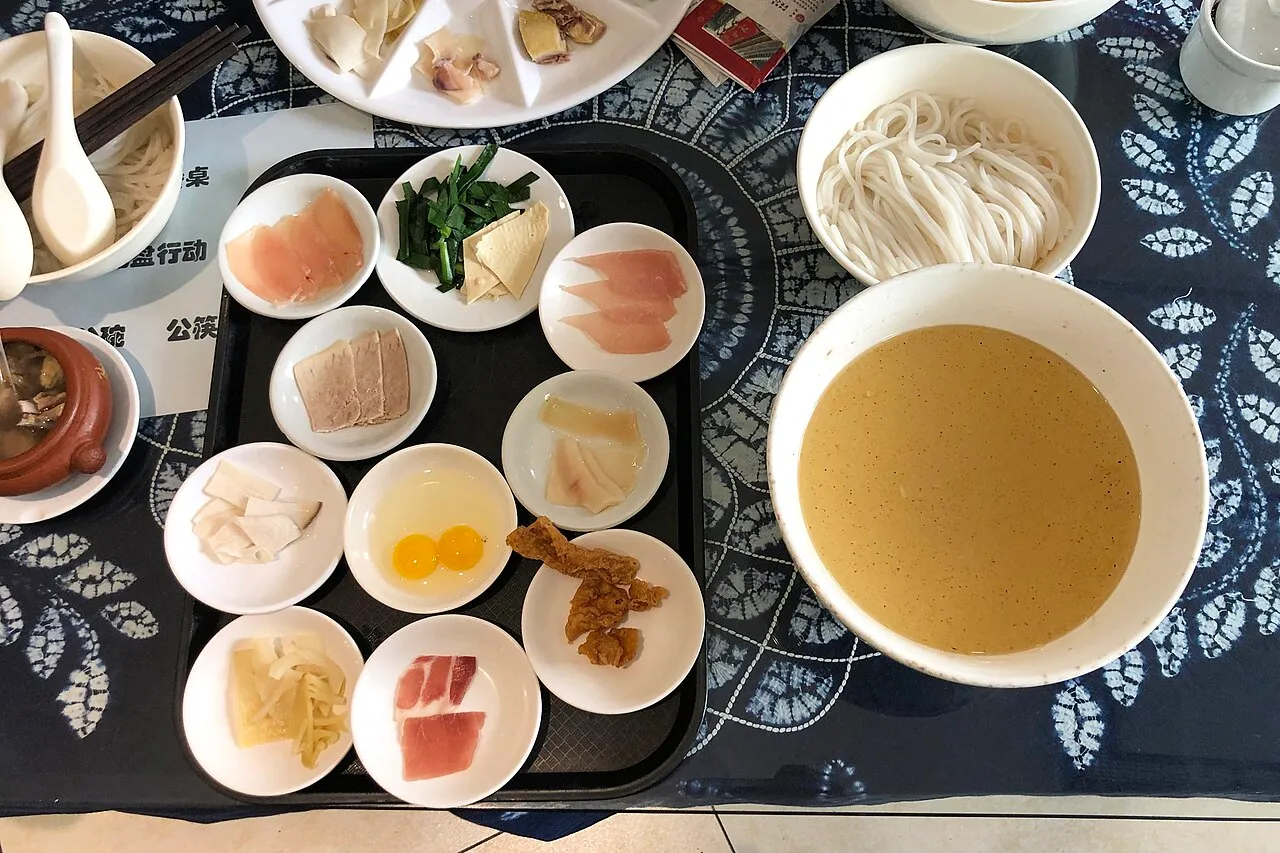 Crossing-the-bridge rice noodles arrive deconstructed — you cook everything in the scalding broth yourself.
Beijing — douzhi & chaogan (豆汁 / 炒肝)
Old Beijing breakfast is an acquired taste. Douzhi is a sour, fermented mung-bean drink that even some locals approach warily, served with a ring-shaped fried dough (jiaoquan). Braver still is chaogan, a glossy stew of pork liver and intestine. Easier wins: fresh baozi and warm soy milk.
Yangzhou — morning tea, Huaiyang style (早茶)
The Grand Canal city has its own elegant tea-breakfast tradition (locals call it “soup wrapped in skin”). Order sanding bao (a bun of diced chicken, pork and bamboo shoot), delicate steamed dumplings, and dazhu gansi — finely shredded tofu in a refined broth.
Tianjin — jianbing guozi (煎饼果子)
Jianbing may be everywhere now, but Tianjin is the original home of jianbing guozi: a mung-bean crepe folded around egg and a crunchy fried cracker. Try the local guǒbācài (锅巴菜) too — torn crepe simmered in a savoury, spiced gravy.
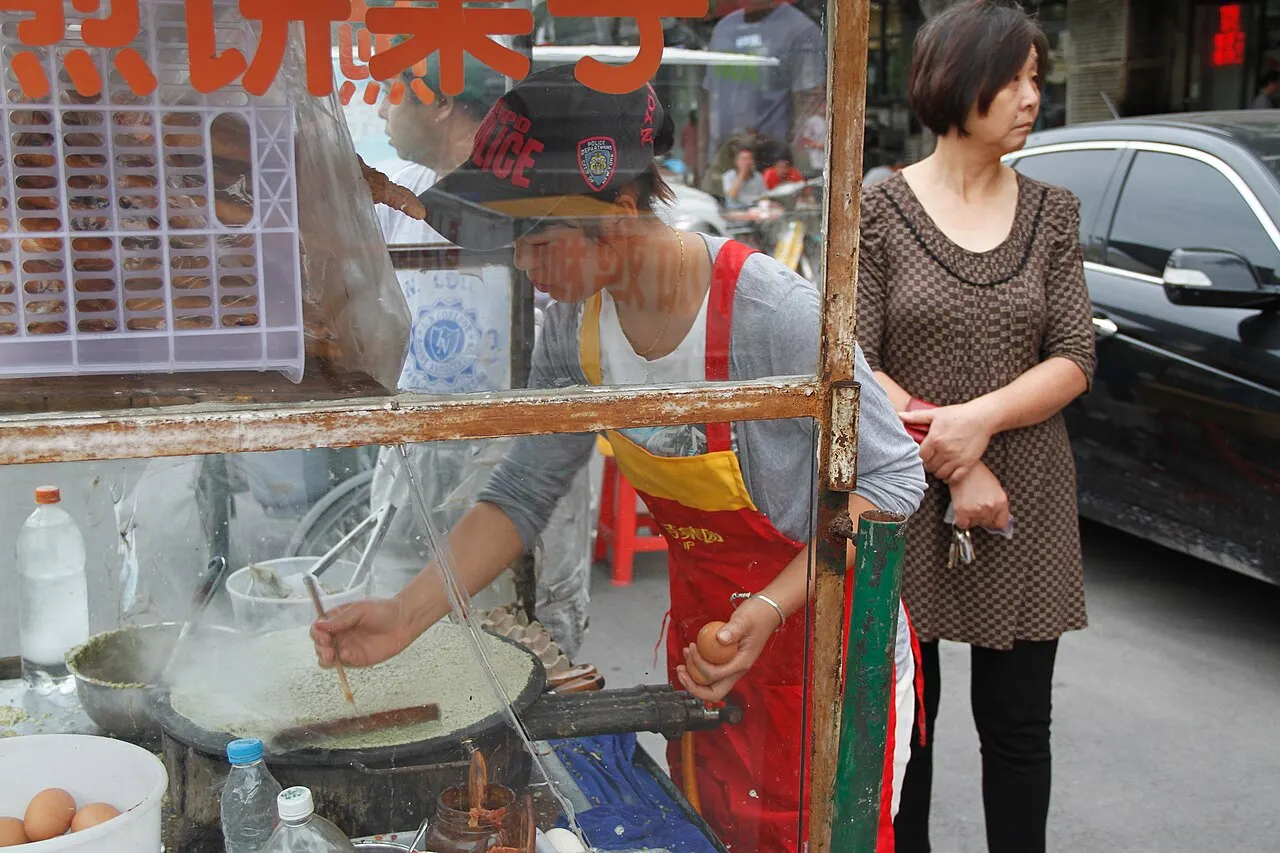 A morning jianbing guozi cart in Tianjin — the city where this now-ubiquitous crepe began.
Shantou / Chaoshan — congee & small plates (白糜)
Teochew country does breakfast as a spread of plain rice porridge (bái mí) surrounded by dozens of tiny cold dishes — braised goose, salted egg, pickled vegetables, marinated shellfish — that you nibble between spoonfuls.
Reliable breakfast chains
Sometimes you don’t want to hunt for a stall — you’ve just landed on a red-eye, or you’re in an unfamiliar city and want a clean, no-stress meal with a picture menu. China’s chains have breakfast covered, usually with screen or QR ordering. (For the full rundown, see our chain restaurants guide.)
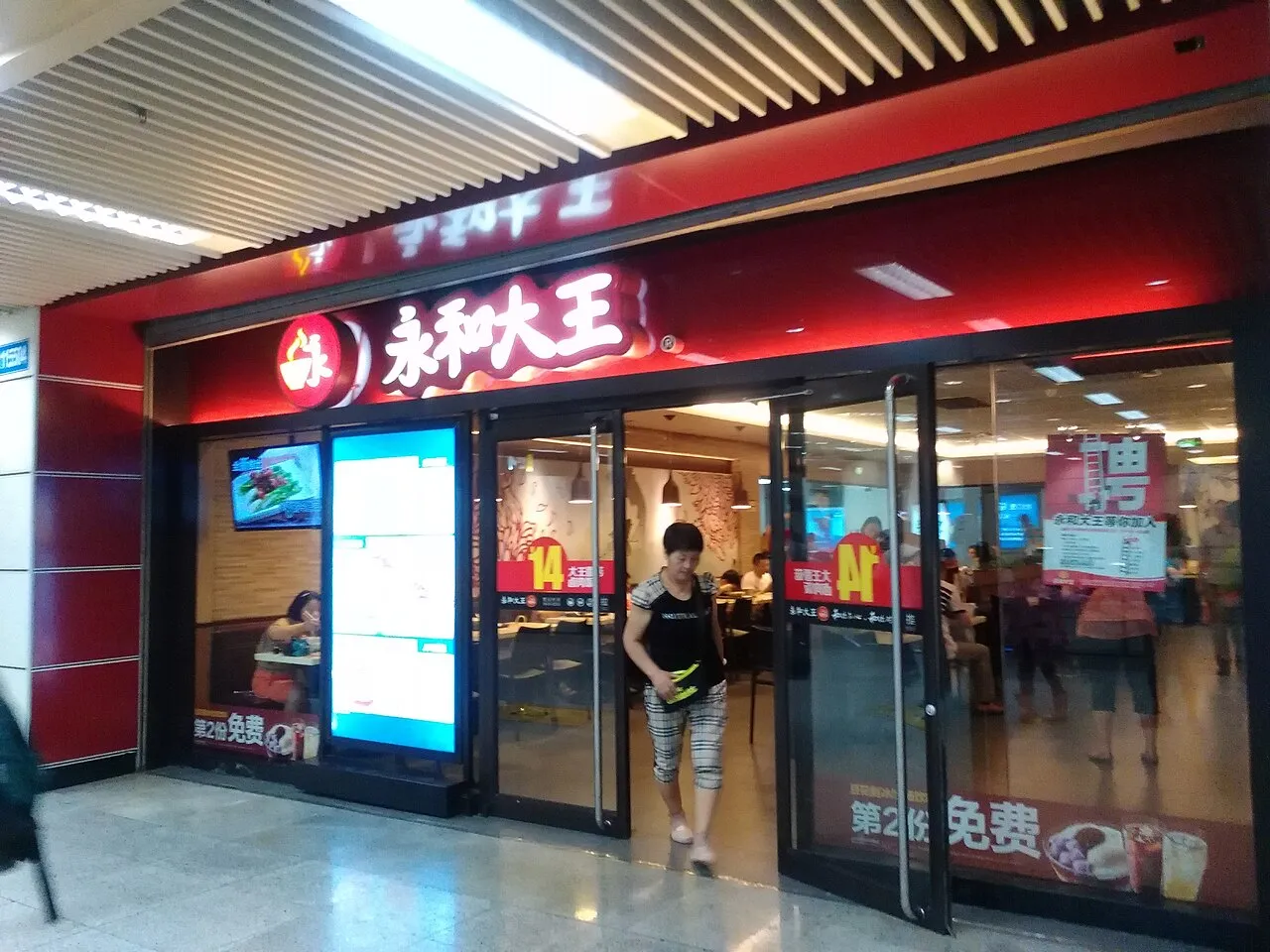 Yonghe King (永和大王) — the closest thing China has to a dedicated breakfast chain, open early and everywhere.
- Yonghe King (永和大王) & Yonghe Soy Milk (永和豆浆) — ~¥15–30. The breakfast chains. Hot or cold soy milk (豆浆), youtiao, congee, egg pancakes and rice-ball rolls (fan tuan), often open very early or 24h. Picture menus and order screens make this the easiest stress-free Chinese breakfast for a first-timer.
- Babi Mantou (巴比馒头) — ~¥6–15. The little grab-and-go counter you’ll pass by metro entrances across eastern China. Steamed baozi in a dozen fillings, plain mantou, soy milk, congee and tea eggs — point, pay and eat on the move for a few yuan.
- KFC, McDonald’s & Dicos (德克士) — ~¥15–25. Yes, really: in China these serve a localised Chinese breakfast. KFC does congee (皮蛋瘦肉粥, century-egg & pork), youtiao and soy milk alongside egg burgers; McDonald’s has congee too. Spotless, photo/English menus and open early — the ultimate safe fallback when nothing else is.
- Hong Zhuang Yuan (宏状元) — ~¥30–45. A Beijing sit-down congee specialist (many branches 24h). A comfortable way to try the northern spread in one place: silky congee plus youtiao, baozi and small Beijing bites.
- Taoyuan Eatery (桃园眷村) — ~¥30–55. The upmarket, design-led take on Taiwanese-style breakfast, usually in shopping malls: fresh soy milk, shaobing (sesame flatbread) wrapped around youtiao, and warm rice rolls. Pricier, but lovely and very photogenic.
- Lanzhou beef-noodle chains — Chen Xianggui (陈香贵), Ma Jiyong (马记永), Zhang Lala (张拉拉) — ~¥30–40. A hot bowl of hand-pulled Lanzhou beef noodles is a proper northwestern breakfast; these clean, modern chains pull it to order, though many open mid-morning rather than at dawn.
How to do breakfast like a local
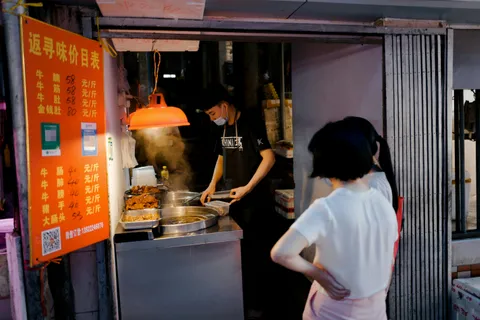
- Go early and follow the queue. The best stalls sell out; a long local line means fresh, fast and safe.
- Eat where it’s busy. High turnover is your friend — watch it cooked hot in front of you.
- You won’t need cash. Even tiny carts take Alipay and WeChat Pay by QR code.
- Can’t read the menu? Point at what looks good, or use a translation app — see ordering food without Chinese.
- Portions are small and cheap (often ¥5–15), so do as locals do and graze across a couple of items.
Breakfast is where China is at its most unguarded and delicious. Skip the hotel buffet, walk out into the morning, and follow your nose. For the bigger picture, read our food guide for first-timers.